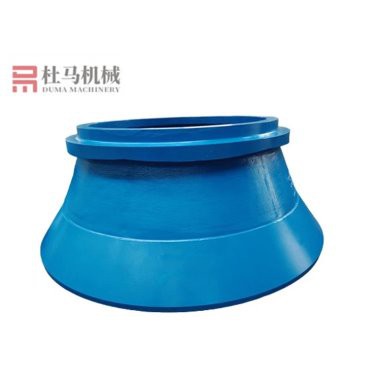
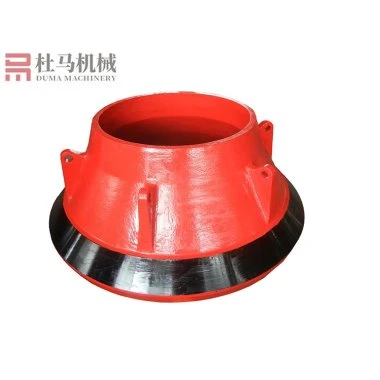
The operational lifespan and crushing efficiency of a cone crusher are dictated not only by the quality of the liner itself but also by the precision of its installation. As a direct-factory manufacturer, we frequently see performance degradation caused by improper assembly. A successful installation is a systematic process that requires specialized tools and a commitment to professional standards, ensuring that your Mantle For Cone Crusher sits perfectly within the crusher frame.
The most common misconception in field maintenance is the reliance on excessive force or makeshift tools. In reality, modern cone crusher liners are precision-engineered components that require a systematic approach to seating. Below is the professional-grade toolkit and procedural approach recommended for any major liner replacement.

1. Essential Tools for Precision Assembly
Heavy-Duty Lifting Systems: A certified overhead crane or hoist system with multi-point lifting beams is non-negotiable. Given the substantial weight of large liners, safety and controlled descent are paramount.
Hydraulic Torque Wrenches: Unlike basic impact tools, hydraulic torque wrenches provide the consistent, calibrated force required to tighten locking bolts to manufacturer specifications, preventing bolt fatigue or loosening during operation.
Precision Measuring Instruments: Digital calipers and depth micrometers are necessary for verifying the clearance between the mantle and concave.
Epoxy Filling Equipment: For stable seating, modern crushers utilize specialized backing compounds. A professional mixing station and high-pressure injection equipment ensure that the void behind the liner is filled uniformly, eliminating stress concentrations that lead to early fractures.
Surface Preparation Tools: Pneumatic grinders or industrial scrapers are essential for removing old backing material and corrosion from the crushing head or bowl to ensure a clean, flat surface for the new liner.
2. The Professional Installation Workflow
Before the liner even touches the machine, the supporting surfaces must be meticulously cleaned. Any remaining old backing material creates an uneven contact surface, leading to liner rocking and eventual failure. Once cleaned, the GP300 Mantle Concave Bowl Liner For Gp300 Cone Crusher must be lowered slowly, ensuring perfect alignment with the locating ribs or pins.
After initial positioning, the application of backing material-typically a high-strength epoxy resin-is the final critical stage. This compound is designed to absorb impact energy and distribute it evenly across the frame. Improperly mixed or poorly applied backing is a leading cause of liner "chatter" and subsequent failure.
3. Why Dimensional Accuracy Matters
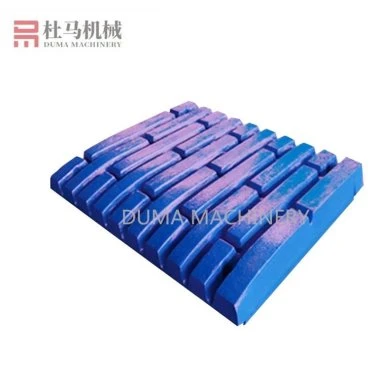
At Duma, we control the entire manufacturing lifecycle, from pattern creation to heat treatment. When you use our high-durability Crusher Wear Liners, you are installing a part that has been verified in our 42,000 m² facility for its dimensional consistency. This precision ensures that the mantle and concave geometry align as intended by the OEM, maintaining the optimal crushing cavity profile and preventing energy-wasting bypasses.
Avoid the temptation to use "universal" tools or to perform on-site modifications like drilling, which can introduce stress risers and void your component's structural integrity. Instead, work with a partner who provides not just the hardware, but the technical guidance on correct installation protocols.
If your maintenance team is preparing for an upcoming shutdown, we invite you to review our technical manuals or contact our engineering team. Whether you need assistance with selecting the correct alloy for your specific ore type or want to verify the torque requirements for your crusher model, we are here to ensure that every replacement is executed to the highest standard. Reach out today to discuss how our factory-direct support can help you maximize your crushing circuit's uptime and efficiency.