



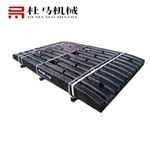


Jaw Crusher Wear Parts
Why Choose Us?
Duma Machinery: Your Professional Jaw Crusher Parts Manufacturer!
1.Brand Advantages
▪ Annual production exceeds 10,000 tons, with sales revenue over 100 million RMB.
▪ ISO9001 certified, meeting export standards with reliable quality.
▪ Supplier of crusher wear plates to Fortune 500 companies.
2.Quality Advantages
▪ Advanced manufacturing processes ensure durability, wear resistance, and high cost-effectiveness.
▪ Heat treatment technology enhances wear resistance and extends service life.
▪ Argon-blown ladle pouring guarantees the quality of jaw plate castings.
▪ 24-hour monitoring and strict inspection using spectrometers.
3.Experience Advantages
▪ Over 10 years of R&D experience, with molds for a full range of crusher wear parts.
▪ Technical team precisely controls material composition and processing time.
▪ Extensive wood pattern and drawing database supports standard part production.
4.Delivery Advantages
▪ Multiple large-scale equipment ensures high production capacity and timely delivery.
▪ Multiple casting production lines with various medium-frequency furnace capacities.
▪ 500 tons of inventory in stock to meet urgent demands.
▪ Professional logistics ensures fast and reliable shipping.
5.Service Advantages
▪ Comprehensive service system for worry-free after-sales support.
▪ Quality issues resolved with replacements and tailored solutions.
▪ Customized casting chemical formulas recommended based on operating conditions.
▪ 3D scanning technology solves drawing issues and supports customization.
▪ Sample workshop available for factory inspections and VIP reception.
About Duma Machinery
Jiangxi Duma Machinery Manufacturing Co., Ltd. was established in 2010 and has become a leading enterprise in the wear-resistant parts casting industry. With an annual production exceeding 10,000 tons, our products range from 2 kg to 10 tons in weight, covering castings made of high manganese steel, ductile iron, gray iron, high-chromium iron, and more.
● Our production base spans 47,000 square meters and is equipped with:
√ 4 sets of 3-8 ton medium-frequency furnaces
√ 4 sets of 10-20 ton natural gas furnaces
√ 20 lifting devices
√ 1 large shot blasting machine
√ 1,600-ton hydraulic press
√ 2 sand casting production lines
√ 2 gantry milling machines
√ 2 CNC lathes for mold processing
√ 14 CNC vertical lathes
√ 2 face milling machines
● Our main products include:
√ Concave and mantle for cone crushers
√ Distributor plates
√ Jaw plates, side guard plates, and toggle plates for jaw crushers
√ Gyratory crusher mantles
√ Blow bars and impact plates for impact crushers
√ Hammers, screen bars, and liner blocks for hammer crushers
√ Other wear-resistant alloy steel parts
Duma Machinery is committed to delivering high-quality, durable wear-resistant components for the mining and crushing industries.
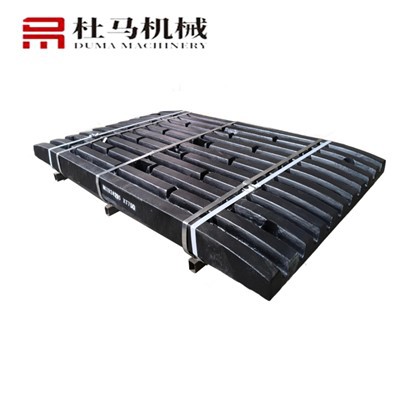


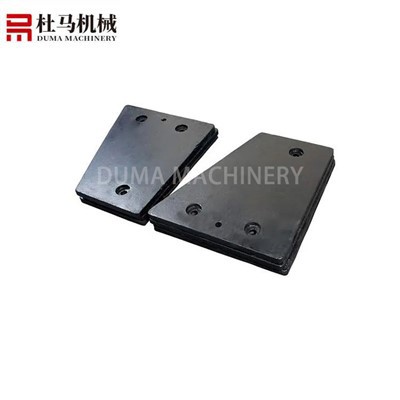


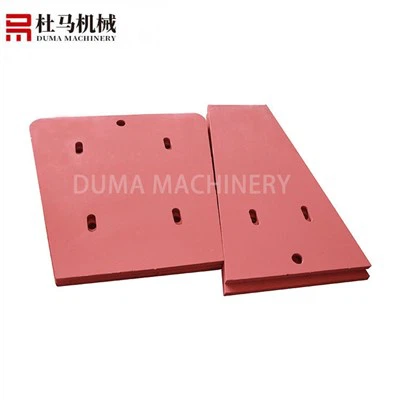


What are the parts of a jaw crusher?
The main jaw crusher components include: the jaw plates (primary crushing surfaces), the toggle plate crusher (safety mechanism), the jaw crusher cheek plates (protective linings), the eccentric shaft (main rotating axis), bearings, flywheels, adjustment wedges, and jaw wedges. All these parts work together to crush materials by applying compressive force between the moving jaw plate and the fixed jaw plate.
Key Points of Jaw Crusher Parts:
● Jaw Plates/Tooth Plates: Both the movable and fixed jaw plates of a jaw crusher are high-quality castings made from high manganese steel. To extend their service life, their shapes are designed to be symmetrical top and bottom, allowing them to be flipped and reused when one end becomes worn. The movable and fixed tooth plates are the primary components subjected to wear during rock crushing. The movable tooth plate is mounted on the movable jaw to protect it.
● Toggle Plate In Jaw Crusher: The toggle plate is a precisely calculated cast iron component. It serves not only as a force-transmitting part but also as a safety device for the crusher. When unbreakable materials enter the crusher, causing it to exceed its normal load, the toggle plate immediately breaks, stopping the crusher and preventing damage to the entire machine. The jaw crusher toggle plate and toggle seat interact through rolling contact, resulting in minimal friction during normal operation. Simply applying a layer of grease to their contact surfaces is sufficient. This component is designed to adjust the discharge opening size and compensate for wear between the jaw plate, toggle plate, and toggle seat.
● Cheek Plate / Jaw Crusher Side Plate / Liner Plate: The side plates of the jaw crusher are located between the fixed and movable jaw plates. They are made of high-quality high-manganese steel castings, which protect the main frame and serve as wear-resistant liners for the sides.
● The eccentric shaft: the main rotating shaft that drives the movement of the swing jaw plate.
● Bearing: Supports the moving parts of the jaw crusher, ensuring smooth operation.
● Flywheel: Mounted on the eccentric shaft, it provides power to the moving jaw crusher and reduces the power required for crushing.
● Wedge Adjustment: Used to adjust the gap between the jaw plates, controlling the size of the crushed material.
What are the advantages of jaw crusher machine parts?
Material versatility: One of the key advantages of jaw crushers is their ability to crush a wide range of materials, including hard and abrasive substances. From granite to basalt, jaw crushers can handle various types of rocks, making them an indispensable part of many applications.
Improve Crushing Performance
The jaw crusher wear parts factory can enhance your crushing performance. They extend service life, reduce cost per ton, and optimize performance.
Increase Capacity
With their durable design and high-quality materials, our jaw crusher liner plates can handle larger workloads than comparable products. This means you can process more material in less time.
Durability
Through special heat treatment processes and materials sourced from reliable crusher spare parts manufacturers, our crusher jaw plates offer greater wear resistance, providing a 10% longer service life compared to traditional high-manganese steel plate in jaw.
Easy Installation
The back and wedge positioning surfaces are fully machined for quick and easy installation.
Materials for jaw crusher replacement parts
The primary material for jaw plate crusher parts, especially the key jaw crusher wear plates, is high manganese steel due to its excellent wear resistance. The crusher body is typically made of cast steel or high-strength steel, while other components, such as the crusher toggle plate and jaw crusher liners, may also use manganese steel for enhanced durability.
keys of jaw crusher plate material composition:
jaw plates for crusher:
High manganese steel (most common), such as Mn13, Mn13Cr2, Mn18, Mn18Cr2, or Mn22Cr2
Replaceable Jaw Crusher Cheek Plates:
Manganese steel or nickel-hard (nickel-chromium alloy cast iron)
Crusher Frame:
Cast steel or high-strength steel
Jaw Crusher Toggle Plate/Toggle Pads:
Carbon steel
Application of Jaw Crusher Parts

Application
Jaw crushers are primarily used in industries such as mining, construction, and recycling to crush large rocks and materials into smaller fragments. Key components like the crusher jaw plates, cheek plates, toggle plate, and connecting rod work together to apply compressive force between the fixed and moving jaws, enabling the crushing action. This makes jaw crushers suitable for applications like aggregate production, ore processing, and demolition debris recycling.
Design of Manganese Jaw Plates
● jaw crusher jaw plates can be either flat or corrugated.
● The tooth spacing depends on the desired product size.
● The ratio of tooth height to tooth spacing can range from 1/2 to 1/3.
Process Flow of Jaw Crusher Parts Factory
The production process of jaw crusher spare parts suppliers mainly includes 3D modeling, casting, heat treatment, machining, and cleaning.
Key steps:

3D Modeling: Technicians confirm the 3D models and drawings.

Casting: The production department casts the jaw plates.

Heat Treatment: The jaw plate for crusher undergo heat treatment and quenching.

Cleaning and Machining: The qualified jaw crusher plates are cleaned and machined.

Delivery: Products are shipped and transported.
Maintenance Tips for Jaw Crusher Parts
To maintain a jaw crusher, the focus should be on regularly inspecting and lubricating key components such as bearings, checking the wear of the jaw plates and toggle plates, adjusting the discharge opening as needed, clearing debris from the crusher, and ensuring the proper feed size to prevent overloading. Always follow the manufacturer’s recommended maintenance schedule and lubrication guidelines.
Key Maintenance Points for universal jaw crusher parts
Regular Inspections:
Check the Stone Crusher Jaw Plates, toggle plates, and other key components for signs of wear.
Inspect the condition of bearings, seals, and lubrication points.
Look for cracks, excessive vibrations, or abnormal noises.
Lubrication:
Regularly lubricate all lubrication points, especially the bearings, to minimize wear.
Use the correct type and grade of grease based on operating conditions.
Jaw Plate Maintenance:
Monitor the wear of the jaw plates and replace them when they reach the wear limit.
Ensure the correct alignment of the movable jaw plate to maintain crushing efficiency.
Toggle Plate Adjustment:
Adjust the toggle plate to control the crushing gap and product size.
Check the movement and alignment of the Jaw Crusher Toggle Block to ensure proper operation.
Discharge Opening Adjustment:
Adjust the discharge opening according to the required product size.
Avoid setting the gap too wide, as it may result in low crushing efficiency.
Cleaning and Debris Removal:
Regularly clean the crusher to remove accumulated debris and prevent blockages.
Remove any material that may interfere with the crushing process.
Feed Size Management:
Ensure that the feed size is within the specified range to prevent overloading and premature wear.
Use a grizzly feeder to remove oversized materials before feeding them into the crusher.
Bearing Maintenance:
Check bearing temperatures and replace worn bearings as needed.
Maintain proper bearing alignment to avoid excessive stress.
Eccentric Shaft Inspection:
Monitor the eccentric shaft for signs of wear or damage.
Replace worn components on the eccentric shaft as necessary.
Important Considerations
Manufacturer Guidelines
Always refer to the maintenance schedule and parts replacement guidelines recommended by the jaw crusher plate manufacturer.
Operating Conditions
Adjust maintenance procedures based on the type of material being crushed and the operating environment.
Trained Personnel
Ensure that only trained personnel perform maintenance tasks on the jaw crusher.
How to Cooperate with Us?
We specialize in providing high-quality jaw crusher wear parts for global customers, including key components such as crusher jaw plates, side liners, elbow plates, and more. To ensure every product meets your needs, we have established a clear cooperation process, which is outlined below:

1.Provide Size and Technical Requirements
We kindly ask you to provide detailed drawings, machine part numbers, or physical samples. This information will help us accurately understand your requirements, including the size, material specifications, hardness standards, and operating environment for the crusher wear liners. If you do not have drawings, our technical team can also design using 3D scanning based on your sample.
2.Draft Design and Feasibility Analysis
Upon receiving your technical data, our engineering team will proceed with a draft design. Using advanced drawing software, 3D simulation technology, and Computer-Aided Casting Analysis (CAE), we can verify the feasibility of the design and optimize the production process. This step ensures the product achieves the best performance in structural strength, wear resistance, and service life.


3.Machining and Production
Once the design is confirmed, we will begin the production process for the jaw crusher spare parts. The production process includes the following key stages:
● Casting: We use high-quality alloy steel or high-manganese steel materials to ensure the strength and toughness of the wear parts.
● Heat Treatment: Through processes such as quenching and tempering, we enhance the hardness and impact resistance of the wear parts.
● Cleaning and Machining: The castings are cleaned and precisely machined to ensure dimensional accuracy and surface finish.
● Quality Control: Every product undergoes strict quality testing, including dimensional measurements, hardness testing, and flaw detection, to ensure compliance with international standards.
4.Sample Confirmation and Mass Production
At the beginning of the production process, we will provide samples for testing and confirmation. If you are satisfied with the samples, we will proceed with mass production, ensuring timely delivery of high-quality products.


5.Logistics and After-Sales Service
We collaborate with several international logistics companies to ensure safe and timely delivery of products. Additionally, we offer comprehensive after-sales services, including technical support and product maintenance advice, to ensure your equipment remains in optimal working condition.
6.Long-Term Cooperation and Customized Services
We look forward to establishing a long-term partnership with you. Based on your feedback and needs, we offer customized services, including special material selection, structural optimization, and expedited delivery to meet the operational demands in various working conditions.

DUMA certifications

ISO 9001 Certification

ISO 45001 Certification

ISO 14001 Certification
Advantages of Collaboration
Professional Team
Our engineers and technicians, with years of experience, ensure precise design and efficient production.
Advanced Equipment
We use modern casting and machining equipment to ensure product quality.
Strict Quality Inspection
Full quality control from raw materials to finished products, ensuring every item meets standards.
Quick Response
We offer 24/7 online consultation to promptly address customer issues.
Cooperation case display


Frequently Asked Questions
Q: 1.What is a jaw plate?
A: A "jaw plate" refers to a metal plate used in a jaw crusher machine, where two plates (one fixed and one movable) come together to crush materials like rocks or aggregate by squeezing them between their surfaces, essentially mimicking the action of a jaw; it is considered the primary wear part in a jaw crusher as it experiences the most direct contact with the material being crushed.
Q: 2.What are the stationary and moveable jaw in a jaw crusher called?
A: In a jaw crusher, the pair of jaw is available where one of the jaw is fixed, called anvil and the other jaw is called as the swinging jaw.
Q: 3.What is the function of the jaw plate?
A: The main function of the fixed jaw plate is to protect the jaw crusher's body and to provide support for the movable jaw die, which is attached to the movable jaw. It also helps to transfer the crushing force generated by the jaw crusher's eccentric motion to the material being crushed.
Q: 4.Why do modern jaw crushers use curved swing jaw plates?
A: Modern jaw crushers often use curved swing jaw plates to prevent material from getting stuck or "choking" near the discharge opening, especially when dealing with fine materials, as the curvature helps with a smoother flow of crushed material out of the crusher; essentially, the concave curve on the swing jaw works against the convex curve on the fixed jaw to create a more efficient crushing action towards the discharge point.
Q: 5.Which steel is used for the plates of stone jaw crusher?
A: The plates of a stone jaw crusher are usually made from high manganese steel, cast steel, or Ni-hard.
Q: 6.What material is used for jaw plate? What is the material of jaw plate?
A: The manufacturing materials for jaw plates are diverse, including cast steel, manganese steel, nickel-hard steel, high-chromium iron, carbon steel, and tungsten carbide. The specific choice of material primarily depends on the actual application scenario and the impact load it needs to withstand. However, in most cases, high manganese steel is typically the preferred material for jaw plates. This material is widely used due to its excellent wear resistance and toughness, making it well-suited for the crushing forces involved in jaw crushers.
Q: 7.What are the different types of jaw plates?
A: Jaw plates are critical components of jaw crushers, designed to crush and process various materials. They come in different types based on their shape, material, and application. Here are the main types of jaw plates:
1. Straight Jaw Plates
Description: These have a flat surface and are used for general-purpose crushing.
Application: Ideal for softer materials or when a uniform particle size is required.
Advantage: Simple design, cost-effective, and easy to replace.
2. Curved Jaw Plates
Description: These have a curved or convex surface to enhance crushing efficiency.
Application: Suitable for harder and more abrasive materials.
Advantage: Provides better grip on materials, reducing slippage and improving crushing performance.
3. Toothed Jaw Plates
Description: These feature teeth or serrations on the surface to improve material grip and crushing efficiency.
Application: Used for crushing tough, hard, or large-sized materials.
Advantage: Enhances breaking force and reduces material blockages.
4. Super Grip Jaw Plates
Description: Designed with an optimized shape and deeper grooves for better material retention.
Application: Ideal for high-capacity crushing operations.
Advantage: Maximizes throughput and reduces wear.
5. Corrugated Jaw Plates
Description: These have a wavy or corrugated surface to increase friction and improve crushing efficiency.
Application: Suitable for medium-hard to hard materials.
Advantage: Reduces material slippage and enhances crushing force.
6. Quarry Jaw Plates
Description: Specifically designed for heavy-duty quarrying applications.
Application: Used in primary crushing of hard and abrasive materials like granite and basalt.
Advantage: High wear resistance and durability.
7. Recycled Material Jaw Plates
Description: Designed for crushing recycled materials like concrete, asphalt, and demolition waste.
Application: Used in recycling plants and construction sites.
Advantage: Resistant to abrasion and impact from irregular-shaped materials.
8. Custom-Designed Jaw Plates
Description: Tailored to specific crushing needs, often based on the type of material and operational requirements.
Application: Used in specialized crushing operations.
Advantage: Optimized performance for specific materials and conditions.
Q: 8.What are the parts of a jaw crusher? What are the components of a jaw crusher? What are the parts and functions of a jaw crusher?
A: The main components of a jaw crusher include: the fixed jaw, moving jaw (also called the swing jaw), jaw plates (liners), main shaft (pitman assembly), toggle plate, eccentric shaft, flywheel, cheek plates, frame, and adjustment wedge; all working together to crush large materials into smaller pieces through compressive force; the key function of each part is:
Jaw plates:
These are the main wear parts that directly crush the material as it enters the crushing chamber, usually made of high-strength materials like manganese steel.
Toggle plate:
Transfers motion from the eccentric shaft to the swing jaw, enabling the crushing action and maintaining proper jaw plate alignment.
Eccentric shaft:
The rotating shaft that provides the oscillating motion to the swing jaw through the toggle plate.
Fixed jaw:
The stationary jaw against which the moving jaw crushes the material.
Moving jaw (Swing jaw):
The jaw that moves back and forth to crush the material against the fixed jaw.
Cheek plates:
Wear plates that line the inside of the crusher body to protect it from wear and tear.
Bearings:
Support the shaft and the ends of the rocker, ensuring smooth movement of the jaw.
Other important components may include:
Adjustment wedge: Used to adjust the gap between the jaws to control the size of the crushed material.
Flywheel: Stores energy during the empty stroke and releases it when material is being crushed, providing a more consistent crushing force.
Crushing chamber: The space within the jaw crusher where the material is crushed.
Q: 9.What are the common Jaw crusher wear parts?
A: Generally speaking, movable jaw plate, fixed jaw plate, side guard is the common wear parts for jaw crusher.
Q: 10.What material is used for jaw crusher liners? What is the material of jaw crusher liner? What is the material composition of jaw crusher plate?
A: A jaw crusher plate is typically made from high manganese steel, which is a type of alloy steel with a high manganese content, providing excellent wear resistance and toughness, making it suitable for the abrasive crushing process in jaw crushers.
Key points about jaw crusher plate material:
Primary material: High manganese steel
Other potential materials: Depending on the application, some jaw plates might use materials like Ni-hard (a nickel-chromium alloyed cast iron), medium-carbon low-alloy steel, or even tungsten carbide for highly abrasive applications.
Composition variations: Different grades of high manganese steel can be used based on the specific crushing requirements, with variations in manganese and carbon content.
Q: 11.What material is cheek plate?
A: A cheek plate, typically used in jaw crushers, is most commonly made from high manganese steel due to its excellent wear resistance and ability to withstand the abrasive forces of crushing materials; other options may include alloy steels depending on the specific application and desired properties.
Q: 12.What is the purpose of a toggle plate in a jaw crusher? What is the function of a toggle plate? What is a toggle plate used for?
A: A toggle plate in a jaw crusher acts as a safety mechanism, designed to break or bend if an uncrushable material enters the crushing chamber, preventing further damage to the crusher by allowing the moving jaw to open and release the uncrushable object; essentially functioning like a fuse within the machine.It's also used to transmit power to the lower end of the movable jaw.
Q: 13.What is the purpose of a cheek plate?
A: jaw crusher cheek plates are critical components in mining machinery, such as crushers and grinding mills, primarily used to support moving parts and reduce wear, ensuring the machine operates efficiently. In jaw crushers, they serve as wear-resistant surfaces, securing materials and providing support, making them essential for efficient material processing in mining operations.
Q: 14.What is the material of jaw crusher toggle plate?
A: The toggle plate (also known as the thrust plate or adjustment plate) in jaw crushers is typically made from high-strength, wear-resistant materials to ensure durability under high pressure and impact loads. Common materials include:
High Manganese Steel: This is the most widely used material due to its excellent wear resistance and toughness. It hardens under high-impact loads, extending its service life. Grades like Mn13 and Mn18 are ideal for jaw crusher toggle plates.
Alloy Steel: Some international brands may use special alloy steels, enhanced with elements like chromium and molybdenum to improve hardness and wear resistance.
Cast Steel: Certain manufacturers employ high-strength cast steel, with heat treatment processes to enhance mechanical properties.
Composite Materials or Special Coatings: High-end products may incorporate special coatings or composite materials on the toggle plate surface to further improve wear resistance and impact strength.
For example, renowned global brands like Metso, Sandvik, and Terex often use high manganese steel or custom alloy materials for their jaw crusher toggle plates, ensuring reliability and longevity in harsh operating conditions. The specific material choice may vary depending on the equipment model and application requirements.
Q: 15.What is the HS code for jaw crusher parts?
A: The HS code for jaw crusher parts is generally considered to be 84749000. This code refers to "Parts of machines of heading No. 84.74" which encompasses parts of crushing and grinding machinery, including jaw crushers.
Key points about the HS code for jaw crusher parts:
Code: 84749000
Description: Parts of machines for sorting, screening, separating, washing, crushing, grinding, mixing or kneading earth, stone, ores, etc.
Q: 16.What is the composition of jaw plate?
A: The material of jaw crusher plates is critical to performance and wear life. Common materials for jaws include manganese steel, high-chrome iron, carbon steel, tungsten carbide, and composition material. Manganese Steel: Known for high wear resistance and toughness, ideal for medium to high abrasiveness.
Q: 17.What is the chemical composition of stone crusher jaw plate? What are rock crusher jaws made of? What are jaw crusher plates made of?
A: A stone crusher jaw plate is typically made from "high manganese steel," which primarily consists of a high percentage of manganese (Mn), often with additional elements like chromium (Cr) in alloys like Mn13Cr2, Mn18Cr2, or Mn22Cr2, depending on the specific application and desired wear resistance; essentially, the key component is a high manganese content making it highly resistant to abrasion.
Key points about jaw plate composition:
Dominant material: High manganese steel
Chemical composition breakdown: Primarily high manganese (Mn) with a smaller amount of chromium (Cr)
Common alloys: Mn13Cr2, Mn18Cr2, Mn22Cr2
Q: 18.What is the angle of toggle plate for jaw crusher?
A: The optimal nip angle for a crusher depends on the type of material being crushed, the hardness of the material, the feed size, and other factors. Generally, the nip angle should be between 20 and 30 degrees to ensure efficient crushing and minimize wear on the crushing
Q: 19.What is a toggle in crusher?
A: The toggle plate of a jaw crusher is a component that connects the movable jaw to the fixed jaw. It is an important part of the jaw crusher because it serves as a safety mechanism that prevents the crushing chamber from being damaged when an uncrushable object enters the crushing chamber.
Q: 20.How to use a jaw crusher liners efficiently?
A: In order to maintain maximum production you should only run your jaw liners down to 10-20% of its original profile height. You might think you're getting your moneys worth but if the face is smooth you are losing production and putting extra stress on the crusher.
Q: 21.How to select a Jaw Liner?
A: There are a few key points that you need to consider when selecting the correct liners for an application: 1. Feed Material Type. 2. Feed Material Hardness / Abrasiveness. 3. Feed Size. 4. Required output. 5. Potential of uncrushable material in the chamber. 6. Required throughput
Q: 22.How to determine the pitch of the crusher liner plate?
A: The size of the pitch depends on the product size, usually equal to about outlet width, tooth height and tooth pitch of the ratio of 1/2 to 1/3.
Q: 23.How to change the crusher wear plates?
A: The first step is to remove the bolts that hold the plate in place. Then inspect the parts for wear and if any are worn, replace them with new ones. After that, install the new plate in the same position as the old one and re-secure the bolts. Finally, test the plate to make sure it is working properly.
Q: 24.How often should you change crusher liners?
A: You should change crusher liners when you notice a significant drop in production levels (around 10% or more), or when the liner has worn down to approximately 1 inch (2.5 cm) thick at the bottom, assuming it's wearing evenly throughout the crushing chamber; this indicates that the liner is nearing the end of its useful life and needs to be replaced to maintain optimal crushing efficiency.
Q: 25.Can jaw plates be removed?
A: The jaw plates are detachable. When the jaw plates of a jaw crusher become worn to a certain extent or require maintenance, they need to be removed and replaced.
Q: 26.Are jaw plates permanent?
A: Jaw plates are not permanent. As the primary working components of a jaw crusher, they are used to crush materials and thus wear out over time. Their service life depends on various factors, including the hardness and abrasiveness of the materials, frequency of use, and maintenance practices.