As a direct manufacturer with a 42,000 m² foundry and ISO 9001:2015 certification, DUMA provides a technical analysis of how jaw crusher wear plates withstand high-temperature operations. Understanding thermal stress is essential for optimizing crushing efficiency in demanding environments.

High-temperature operations subject jaw crusher wear plates to intense thermal stress, directly impacting their physical and chemical stability. Thermal expansion in high-temperature environments generates significant internal stress within the wear plate's matrix. Without precision engineering, this leads to micro-crack propagation and premature structural failure.
One of the key factors that affect how well jaw crusher wear plates perform in high - temperature environments is the material they're made of. There are different types of materials used for these plates, such as manganese steel, which is a popular choice. Manganese steel has good toughness and wear resistance. But in high - temperature conditions, its properties can change. Standard manganese steel can soften under extreme heat; however, DUMA mitigates this through a microcomputer-controlled automated heat treatment process. By employing stepped heating and water toughening, we ensure a stable Austenitic structure that resists thermal deformation.While standard materials soften, DUMA's alloys maintain an initial hardness of HB200, which rapidly work-hardens to over HB500 under impact, preserving the crushing profile even in thermal zones.
Standard manganese steel may soften under heat, but DUMA's premium alloys are engineered to maintain a surface hardness of over HB500 through specialized work hardening under impact, even when the ambient temperature rises.
Another material option is alloy steel. Alloy steel can be designed to have better heat resistance compared to manganese steel. It can maintain its hardness and strength at higher temperatures. This makes it a great choice for jaw crusher wear plates that are going to be used in high - temperature environments. However, alloy steel can be more expensive than manganese steel. So, there's a trade - off between cost and performance.
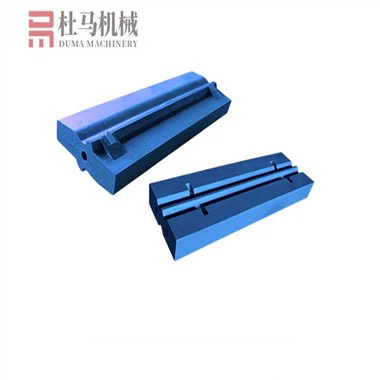
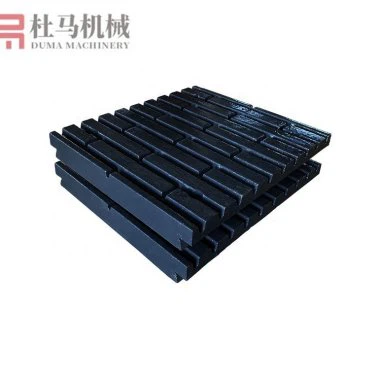
Now, let's take a look at some of the products we offer. We have the Crusher Jaw Plate. This plate is designed to handle the tough job of crushing rocks and other materials. In high - temperature environments, it's important that the crusher jaw plate can maintain its shape and integrity. Our crusher jaw plate is made from high - quality materials that are selected to perform well even when the temperature is high.

We also have the Movable Jaw Plate For Jaw Crusher. The movable jaw plate is an essential part of the jaw crusher. It moves back and forth to crush the materials. In high - temperature environments, the movable jaw plate needs to be able to withstand the heat and the mechanical stress. Our movable jaw plate is engineered to do just that. It's made with materials that can resist heat - induced deformation and wear.
And then there's the Jaw Swing&Fixed Plates Mn13. These plates are made from Mn13, which is a type of manganese steel. While Mn13 has good wear resistance under normal conditions, in high - temperature environments, it might face some challenges. DUMA enhances Mn13 performance through controlled solution heat treatment, ensuring zero network carbide precipitation and achieving superior thermal stability.
Beyond lab simulations, DUMA performs Metallographic Testing on every batch to ensure zero network carbide precipitation. We also provide UT (Ultrasonic) and MT (Magnetic Particle) non-destructive testing to guarantee structural integrity under thermal load.
One of the things we've found is that proper heat treatment can make a big difference. Heat treatment can change the microstructure of the materials, which in turn can improve their heat resistance. For example, by quenching and tempering the plates, we can increase their hardness and toughness, making them more suitable for high - temperature use.
Another important aspect is the design of the wear plates. A well - designed wear plate can distribute the stress more evenly. This reduces the chances of localized overheating and stress concentration. Our engineers work hard to come up with designs that are optimized for high - temperature performance.
In addition to the material and design, the maintenance of the jaw crusher wear plates is also crucial in high - temperature environments. Regular inspection can help detect any signs of wear or damage early on. If there are small cracks or signs of excessive wear, we can take steps to repair or replace the plates before they fail completely.
We also recommend that our customers follow the proper operating procedures. For example, they should avoid overloading the crusher, as this can generate more heat and put extra stress on the wear plates. They should also make sure that the crusher is properly lubricated, as this can help reduce friction and heat generation.
So, if you're in the market for jaw crusher wear plates that can perform well in high - temperature environments, we've got you covered. We've put a lot of effort into developing products that can meet the challenges of high - temperature operation. Whether you need a crusher jaw plate, a movable jaw plate, or jaw swing and fixed plates, we have the right solution for you.
If you're interested in learning more about our products or want to discuss your specific needs, don't hesitate to reach out. We're here to help you find the best jaw crusher wear plates for your application.
References
- "Materials Science for Engineers" - A textbook that provides in - depth knowledge about the properties of different materials used in engineering applications.
- "Crushing Equipment Handbook" - A guide that offers practical information on the operation and maintenance of jaw crushers and their wear parts.