In high-capacity mineral processing, the cone angle is not just a design specification-it is the primary driver of your Total Cost of Ownership (TCO). At DUMA's 42,000 m² integrated foundry, we engineer every liner to withstand the localized stress concentrations dictated by your crusher's unique geometry.

1. Understanding the Cone Angle in Crushers
The cone angle in a cone crusher is defined as the angle formed between the mantle and the concave. It plays a fundamental role in determining the crushing process and the interaction between the crushed material and the liners. A smaller cone angle typically results in a more gradual reduction of the material size, while a larger cone angle can lead to a more rapid reduction.
2. Impact on Wear Distribution
A small cone angle facilitates a gradual reduction ratio, ensuring uniform compressive stress. This allows DUMA's high-manganese steel (Mn18/Mn22) to achieve its full work-hardening potential, rising from an initial HB200 to over HB500 during peak operation.
Conversely, a large cone angle intensifies impact energy at the lower crushing zone. Without the pure Austenite structure guaranteed by our microcomputer-controlled water-toughening process, standard liners will suffer from premature "bell-mouth" wear or thermal cracking under these extreme loads.
3. Influence on Crushing Efficiency
The cone angle also has a profound impact on the crushing efficiency. A well - designed cone angle can optimize the crushing process, ensuring that the material is crushed to the desired size with minimal energy consumption.
A smaller cone angle allows for a longer crushing path for the material. This extended path provides more opportunities for the particles to be crushed, resulting in a higher degree of size reduction. However, this may also lead to a slower throughput rate. On the other hand, a larger cone angle can increase the throughput rate as the material is crushed more quickly. But it may sacrifice some of the fine - crushing ability, leading to a coarser final product.
4. Effect on Liner Material Selection
The cone angle affects the choice of liner material. For crushers with a small cone angle, where the wear is more evenly distributed, a general - purpose wear - resistant material may be sufficient. These materials can withstand the relatively uniform abrasion and provide a reasonable service life.
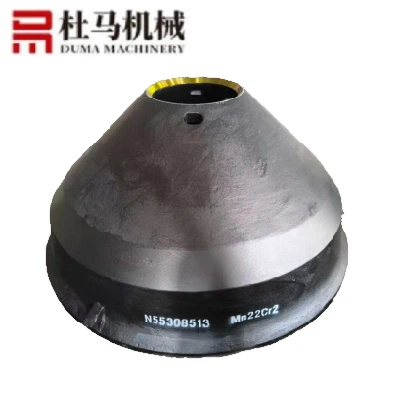
For crushers with aggressive cone angles, DUMA recommends our alloy-upgraded Mn22Cr2 liners. Our engineering team utilizes Reverse Engineering from your worn samples to optimize the tooth profile, ensuring that even with rapid reduction angles, the liner maintains 100% integrity through Technical Traceability-verified by our in-house UT and Metallographic testing.
5. Impact on Liner Installation and Maintenance
The cone angle can also influence the installation and maintenance of the liners. A proper cone angle ensures that the liners are installed correctly and can function optimally. If the cone angle is not within the specified range, it may cause misalignment of the liners, leading to uneven stress distribution and premature wear.
During maintenance, understanding the relationship between the cone angle and liner performance is crucial. For example, when replacing the liners, the cone angle needs to be checked and adjusted if necessary. This ensures that the new liners will perform as expected and have a longer service life.
6. Case Studies
Let's look at some real - world examples to illustrate the impact of the cone angle on liner performance. In a mining operation, a cone crusher with a relatively small cone angle was used to crush limestone. The liners showed even wear after a long period of operation, and the crushing efficiency was stable. The final product had a consistent particle size distribution, which was suitable for the subsequent processing steps.
In another case, a crusher with a large cone angle was used to crush hard granite. The liners experienced rapid and uneven wear, especially in the areas near the bottom of the crushing chamber. The throughput rate was high, but the quality of the final product was not as fine as desired. Frequent liner replacements were required, which increased the overall operating cost.
7. Optimizing the Cone Angle for Liner Performance
To optimize the performance of the liners, it is essential to select the appropriate cone angle based on the type of material to be crushed, the desired product size, and the production requirements. For materials that are easy to crush, a larger cone angle may be suitable to increase the throughput rate. For harder materials or when a finer product is required, a smaller cone angle may be more appropriate.
In addition, regular monitoring and adjustment of the cone angle can help maintain the optimal performance of the liners. This can be achieved through advanced sensor technologies and data - driven analysis.

8. Conclusion and Call to Action
In conclusion, the cone angle of the crusher has a significant impact on the performance of the liners. It affects wear distribution, crushing efficiency, liner material selection, installation, and maintenance. As a Cone Crusher Liners supplier, we are committed to providing our customers with high - quality liners that are designed to work optimally with different cone angles.
If you are looking for reliable Cone Crusher Liners or need advice on optimizing your crusher's performance, we are here to help. Our team of experts can provide you with detailed information and customized solutions based on your specific requirements. Contact us to start a conversation about how we can improve your crushing operations and extend the service life of your liners.
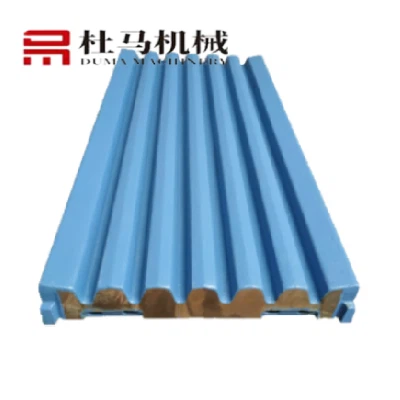
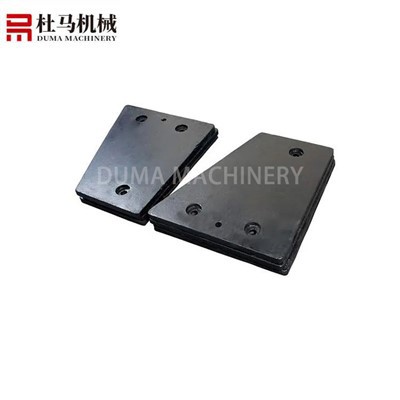
With over 4,000 sets of patterns, DUMA provides precisely matched Mantles and Bowl Liners for Metso HP/GP and Sandvik CH/CS series, ensuring micron-level Fit Accuracy regardless of the cavity angle
References
- Smith, J. (2018). Cone Crusher Design and Performance. Mining Engineering Journal, 35(2), 45 - 52.
- Johnson, R. (2019). Wear Mechanisms in Cone Crusher Liners. Wear Science Review, 12(3), 67 - 74.
- Brown, A. (2020). Impact of Geometric Parameters on Cone Crusher Efficiency. Crushing Technology Journal, 22(4), 89 - 96.