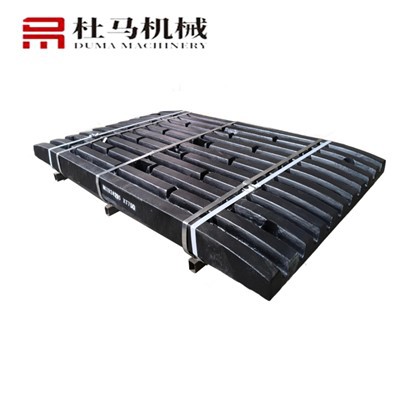
In the competitive landscape of aggregate production and mining, procurement managers often focus on the upfront cost of wear parts. However, understanding why the price of a Cone Crusher Bowl Liner varies is critical to managing your total cost of ownership (TCO). As a direct manufacturer, we see a wide range of inquiries regarding pricing. To make informed purchasing decisions, it is essential to look beyond the sticker price and understand the metallurgical and engineering factors that define quality and value.

The Impact of Metallurgical Engineering on Pricing
The material composition of a Cone Crusher Bowl Liner is the most significant factor in its cost structure. While manganese steel remains the industry standard, the nuances of the alloy are where price gaps emerge.
High-manganese steels, such as Mn13, Mn18, and Mn22, are designed to work-harden under the massive compressive forces of a cone crusher. A cheaper liner may use lower-grade scrap metal in the smelting process, resulting in impurities that compromise the steel's ability to harden uniformly. At our facility, we strictly control the chemical composition of each batch. We ensure that the chrome content is optimized, which directly influences the material's toughness and resistance to cracking under heavy impact.
When you consider high-chrome alloys or advanced composite materials, the cost increases due to the scarcity of these raw elements and the specialized technical knowledge required to cast them correctly. These materials are engineered for extreme abrasive environments where manganese steel would wear down too quickly. Investing in a higher-grade material initially often yields a lower cost per ton processed, as the extended service life significantly reduces the frequency of labor-intensive liner changes.
Manufacturing Precision: Casting vs. Forging vs. Machining
The methodology employed to manufacture your wear parts is a direct reflection of the price you pay. Our factory integrates multiple high-precision processes to ensure that every Cone Crusher Bowl Liner meets exact tolerances.
Casting is the foundational step, but the "precision" of the casting is where quality varies. Poorly controlled cooling rates or inconsistent pouring temperatures can lead to porosity-micro-voids within the steel that act as stress concentrators, leading to early failure. Our automated heat treatment process, utilizing water-toughening techniques, ensures a stable austenitic structure. This process is energy-intensive and requires sophisticated machinery, which is a key factor in our cost structure.
Furthermore, the post-casting machining process is crucial. A liner that is not perfectly matched to the bowl will vibrate, causing uneven wear and potential damage to the crusher's frame. We utilize precision milling and grinding to ensure a "ready to use" fit. While this adds to the production cost, it saves our clients thousands in downtime and field modifications, which is a value proposition that cheap, low-precision parts simply cannot offer.
Design Complexity and Customization Requirements
The geometry of the cavity is arguably as important as the material itself. The design of a Cone Crusher Bowl Liner involves complex tooth profiles and crushing chamber shapes that must be engineered to match your specific feed size and output requirements.
Larger liners inherently require more material, naturally increasing the cost. However, the design complexity also plays a role. If your application requires a specific profile to increase the crushing ratio or to prevent material bridging, the engineering time and the complexity of the mold preparation will influence the price. We maintain a vast library of over 4,000 patterns, which allows us to provide standard profiles for brands like Metso or Sandvik at a competitive price point. When a project demands a custom design based on reverse engineering of your worn samples, the extra R&D and tooling effort will be reflected in the final quote, but this ensures a perfect match for your unique operational environment.
The Hidden Costs of Low-Quality Components
When evaluating prices, it is tempting to choose the cheapest option. However, in the aggregate industry, the purchase price of a liner is only a small fraction of the total operational cost. Consider the costs associated with premature failure:
- Downtime Costs: Every hour your crusher is down for a premature liner replacement costs you revenue.
- Labor Costs: Frequent replacements mean higher expenses for maintenance crews and heavy lifting equipment.
- Crusher Damage: A poorly fitted liner can lead to vibration, which puts unnecessary stress on the main shaft, bushings, and hydraulic systems of your crusher.
By choosing a manufacturer that provides comprehensive technical documentation-such as material reports, hardness test results, and metallographic analysis-you are purchasing more than just a piece of steel. You are purchasing the assurance that the part will perform as expected.
Supply Chain Stability and Factory Direct Pricing
As a direct factory-based entity, we eliminate the unnecessary layers of middlemen that often inflate the prices of wear parts. Our pricing is reflective of our efficiency, our professional purchasing team, and our streamlined internal management.
Our ability to maintain large quantities of stock for common models ensures that we can provide stable pricing even when market demand fluctuates. When raw material costs for manganese or chromium rise, our deep inventory and long-term supplier relationships allow us to buffer these spikes for our clients. We strive to provide the most competitive price, not by cutting corners, but by optimizing our manufacturing process to ensure that you get the best value for your investment.
Why Technical Support is Part of the Package
At our company, we view the sale of a Cone Crusher Bowl Liner as the beginning of a partnership. Our technical team is available 24/7 to assist with selection, installation guidance, and wear analysis. If your current liners are not meeting their expected wear life, we provide the onsite or remote expertise to analyze why.
Whether it is a matter of adjusting the feed distribution, optimizing the closed-side setting (CSS), or upgrading your alloy to match your specific ore hardness, we help you make the right choice. This level of technical support is built into our value proposition. We don't just supply parts; we supply solutions that keep your plant running at maximum efficiency.

Making the Right Procurement Decision
When you are ready to secure a new liner, do not just compare the bottom-line price. Compare the metallurgical data, the quality assurance protocols, and the technical support provided. If you have questions about your specific crushing needs, our team is ready to analyze your current wear patterns and provide a tailored recommendation.
We invite you to reach out to our team to discuss your upcoming procurement needs. Whether you need a standard replacement or a custom-engineered solution to solve a persistent wear issue, we have the manufacturing capacity and technical expertise to assist you. Contact us today to learn how our direct-factory approach can help you lower your operational costs and increase your production throughput.