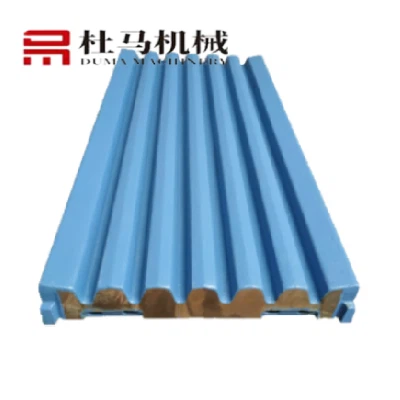
In the competitive landscape of mining, quarrying, and construction, the operational efficiency of a primary crushing circuit often hinges on a single, critical component: the jaw crusher liner. As global industrial demands fluctuate, understanding the underlying market dynamics for these wear parts is essential for plant managers and procurement specialists seeking to optimize their Total Cost of Ownership (TCO).

The Pulse of the Industry: Why Demand Remains Resilient
The global demand for high-quality wear parts is not merely a byproduct of general industrial activity; it is a response to the increasing need for operational continuity. In high-impact environments, the failure of a liner leads to unplanned downtime, which can cost operations thousands of dollars per hour. Consequently, the market has shifted away from "commodity-grade" replacements toward precision-engineered components.
Mining operations in regions such as Australia, South Africa, and South America are currently prioritizing components that offer superior "fit accuracy." This demand is driven by the necessity to eliminate on-site modifications and ensure that the jaw crusher liner integrates seamlessly with the existing frame of equipment from OEMs like Metso or Sandvik.
Key Factors Driving Modern Procurement Decisions
- Material Metallurgy and Hardening Potential: The most significant trend in current demand is the shift toward advanced manganese steel formulations (Mn13, Mn18, Mn22). Operators are increasingly moving away from standard castings in favor of components that provide optimized work-hardening properties-where the surface hardness exceeds HB500 under impact while maintaining a tough, ductile core.
- Technological Traceability: In an era where supply chain transparency is paramount, the market is demanding more than just a part; it requires a digital and technical footprint. Customers are increasingly selecting suppliers who provide comprehensive metallurgical reports, including metallographic testing data to ensure the absence of brittle carbides.
- The "Ready-to-Use" Mandate: Modern maintenance teams are under pressure to shorten shutdown cycles. This has increased the market demand for liners that undergo rigorous dimensional inspection during the manufacturing process. The ability to install a component without manual grinding or adjustments is now a non-negotiable requirement for efficiency-driven sites.
Navigating the Global Supply Landscape
As the industry globalizes, the logistical capability of a supplier has become as vital as their casting capability. The demand is currently shifting toward suppliers who operate as direct entities-those that own their facilities rather than trading houses. A 42,000 m² facility with in-house production capabilities is no longer a luxury; it is a safeguard against the supply chain bottlenecks that frequently plague the industry.
Moreover, the rise of "reverse engineering" services has democratized the market, allowing operators of older or legacy equipment to source high-performance replacements even when original manufacturer drawings are unavailable. By leveraging 3D scanning and pattern storage-such as the massive 4,000+ pattern library maintained by industry leaders-suppliers can now provide precision components for equipment that has long been out of production.

Strategic Alignment with Long-Term Goals
For procurement professionals, the decision-making process is increasingly focused on the "cost-per-ton" rather than the "initial purchase price." By investing in liners that utilize TIC (Titanium Carbide) inserts or custom-alloyed compositions tailored to specific ore hardness, mines can extend the operational life of their wear parts by 20% to 40%.
This long-term perspective is the hallmark of professional fleet management. It involves moving beyond standardized mass-market parts and engaging with engineering teams that can offer consultation on tooth profiles-whether selecting a sharp profile for primary applications or a more robust design for abrasive materials.
Partnering for Operational Excellence
The market for jaw crusher liners is evolving into a sector defined by technical partnership rather than simple procurement. As you look to secure your next batch of wear parts, prioritize suppliers who can offer the perfect marriage of metallurgical expertise, rigid quality control, and a proven track record of international logistics.
Whether you are seeking a jaw plate for a massive C160 jaw crusher or a set of custom guard plates for specialized applications, the focus must remain on the precision of the casting and the stability of the supply chain. Ensuring that your supplier can provide full traceability and 24/7 technical support is the ultimate strategy for minimizing downtime and maximizing the throughput of your crushing operation.