

Maintaining optimal performance in heavy-duty crushing operations requires more than just high-quality components; it demands an understanding of how environmental and operational temperatures influence material integrity. For mine operators and plant managers, ignoring the thermal dynamics of crushing circuits often leads to premature component failure, increased downtime, and inflated maintenance costs.

Thermal Expansion and Dimensional Precision
At the core of efficient crushing lies the concept of fit accuracy. Every high-performance Crusher Mantle is manufactured to strict tolerance specifications to ensure seamless integration with the crusher frame. When operating temperatures fluctuate significantly, metallic components undergo thermal expansion and contraction.
In high-temperature environments, inadequate clearances can lead to localized stress concentrations, increasing the risk of mechanical binding. Conversely, extreme cold can cause contraction, potentially creating gaps that induce vibrations. These vibrations accelerate fatigue in surrounding hardware and reduce overall crushing efficiency. Precision-engineered parts, manufactured in facilities that utilize rigorous dimensional inspection, are essential to mitigate these thermal-mechanical risks.
The Role of Metallurgy: Hardness and Microstructure
The performance of manganese steel-the industry standard for wear parts-is inherently tied to its microstructure. A common misconception is that all steel parts respond to heat identically. However, improper management of operating temperatures can compromise the material's ability to undergo work hardening.
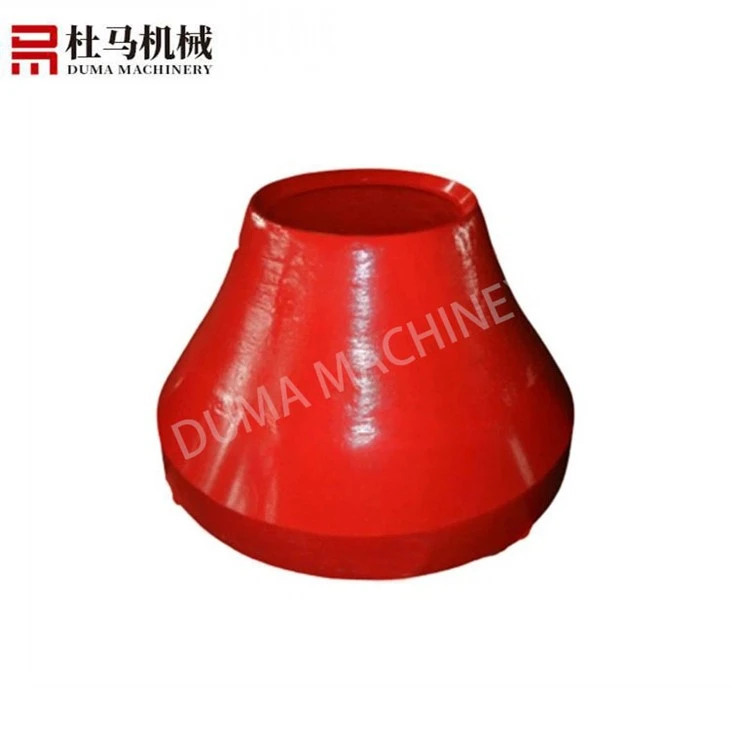
For instance, high-manganese steel relies on a stable, single-phase austenitic structure to provide the "tough yet hard" balance required for severe impact environments. Exposure to extreme thermal cycles without proper initial heat treatment-such as advanced water toughening-can lead to the precipitation of brittle carbides along grain boundaries. This metallurgical degradation significantly shortens the lifespan of your Bowl Liner, as the material loses its capacity to harden upon impact, resulting in rapid wear and potential brittle fracture.
Viscosity Shifts and Lubrication Failure
Temperature directly dictates the effectiveness of lubrication systems. In high-heat scenarios, lubricants often suffer from reduced viscosity, failing to maintain the necessary film strength between bushings and eccentric assemblies. This leads to boundary lubrication, resulting in metal-on-metal contact and localized heat generation that can permanently damage precision surfaces.
Conversely, in sub-zero operating conditions, lubricants can thicken, causing "starvation" at critical friction points. Ensuring your maintenance team
uses temperature-grade-appropriate lubricants is a vital, yet often overlooked, strategy for protecting internal components.
Preventing Thermal Fatigue through Material Optimization
Thermal fatigue occurs when components are subjected to repeated, rapid thermal cycling. For large Concave segments, this manifests as micro-cracking that expands over time. To combat this, Duma utilizes controlled heat treatment processes, including microcomputer-controlled quenching, to ensure internal stress is minimized during the casting process.
By choosing alloys specifically formulated for your site's specific ore hardness and ambient thermal environment, you can significantly extend the wear life of your components. Professional material selection-moving from standard Mn13 to optimized Mn18, Mn22, or even ceramic-infused alloy upgrades-can provide the thermal stability required to withstand extreme operational demands.
Conclusion: Partnering for Longevity
Temperature management is not merely a maintenance task; it is an engineering challenge that requires the right partnerships. By utilizing components that are subject to strict metallographic testing and batch traceability, you ensure that every piece of equipment can withstand the rigors of your unique operating environment.
Duma provides more than just spare parts; we provide comprehensive wear solutions, from initial consultation to on-site failure analysis. By integrating high-precision manufacturing with professional metallurgical support, we help you reduce downtime and maximize the return on your capital investment.
If you are currently experiencing premature wear or performance issues, our engineering team is available 24/7 to analyze your specific operational data and provide custom-tailored material recommendations. Contact us today to secure your inventory and optimize your crushing circuit.


