

In the demanding industries of mining and aggregate processing, equipment reliability dictates operational profitability. Jaw crushers operate under extreme mechanical stress, high abrasive impacts, and relentless cyclic loading. Because components such as jaw plates and swing stocks endure direct friction against abrasive ores, material integrity is paramount. Opting for substandard components may seem economically attractive initially, but it severely compromises production efficiency, safety, and long-term financial returns.

1. Accelerated Wear and Compromised Durability
The foundational requirement of any crushing component is its ability to resist abrasive wear and high-impact deformation. Premium components utilize specialized high manganese steel grades (such as Mn13, Mn18, or Mn22) that undergo precise thermal processing.
When manufacturers use low-grade materials or cut corners during production, the steel fails to achieve proper work-hardening properties.
High-quality components subjected to proper water toughening (water quenching) develop a stable austenitic structure with an initial hardness around HB200 that rapidly hardens past HB500 under impact.
Substandard parts lacking rigorous metallurgical control often display premature structural fatigue, causing jaw plates to wear out within weeks rather than lasting for standard operational cycles.
2. Uncontrolled Downtime and Escalated Financial Losses
Component failure directly triggers operational paralysis. When a wear part fails prematurely, operators must execute unscheduled shutdowns to replace the components.
Unplanned maintenance causes severe bottlenecks, leading to missed production quotas and unrecoverable financial losses.
While low-priced replacement parts reduce initial purchasing expenditure, the frequency of replacements compounds logistics expenses, labor costs, and lost revenue. Sourcing reliable items from an established jaw crusher parts manufacturer ensures consistent production continuity and reduces overall operational overhead.
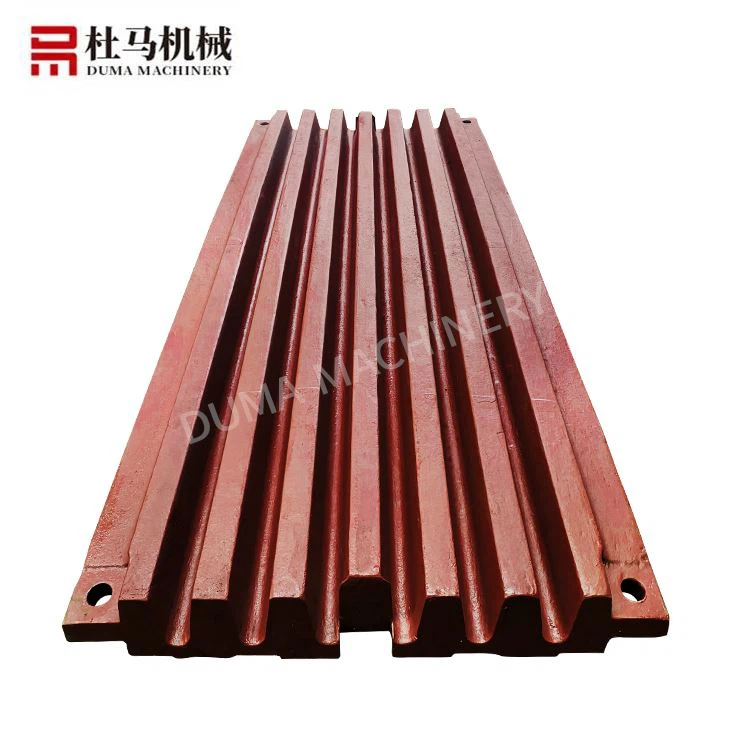
3. Inconsistent Crushing Performance and Product Quality
The mechanical efficiency of equipment like Metso or Sandvik crushers relies heavily on the precise tooth profile and structural integrity of the crushing chambers.
Low-quality wear parts often feature uneven hardness distribution and poor dimensional tolerances, leading to rapid, uneven surface wear.
As the geometry of the jaw plate degrades irregularly, the crushing action loses its uniformity, resulting in oversized output material that strains downstream processing circuits and reduces final product market value.
4. Amplified Safety Hazards and Structural Risks
Structural failure in high-load crushing environments creates severe safety vulnerabilities. Substandard casting practices can introduce internal micro-defects, shrinkage cavities, or brittle carbide precipitations within the steel matrix.
Under high compressive loads, brittle components can fracture catastrophically, creating flying debris hazards for on-site personnel.
Furthermore, deformed or prematurely worn components increase the frequency of material jams, blockages, and excessive stress on the jaw crusher swing stock, risking major structural damage to the entire machine framework.
5. Ensuring Reliability Through Strict Quality Control
To eliminate these operational risks, plant operators must prioritize components backed by rigorous manufacturing transparency and technological verification. Ensuring long-term efficiency requires:
- Strict Metallographic Testing: Ensuring the complete elimination of brittle network carbides to prevent catastrophic early fractures.
- Precision Dimensional Inspection: Maintaining strict micro-level tolerances to guarantee seamless, ready-to-use installation without requiring on-site modifications.
- Complete Batch Traceability: Providing comprehensive material reports, hardness logs, and heat treatment curves for every production batch.
Investing in certified, high-grade wear components safeguards heavy machinery, optimizes production output, and ensures a safer working environment for industrial operations.


