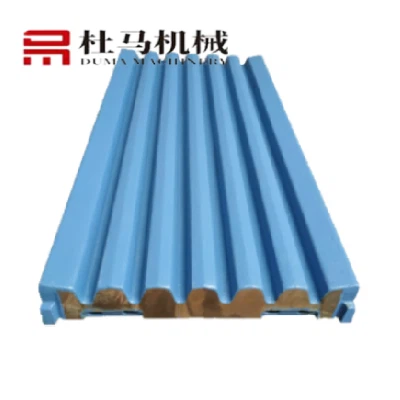
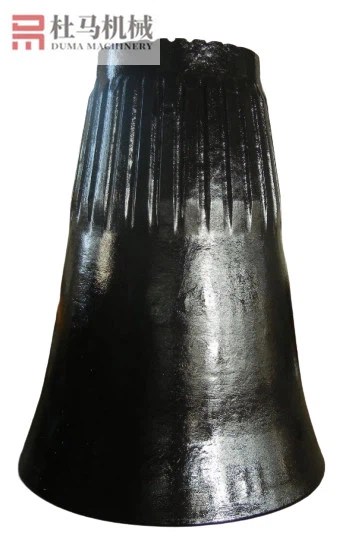
Operating a jaw crusher in a high-dust environment is an inevitable reality for many mining and quarrying operations. While many operators worry about the impact of dust on the longevity of their Crusher Jaw Plate the true challenge lies in the synergy between material metallurgy and equipment maintenance. Understanding how to manage these harsh conditions is critical to maintaining operational efficiency and reducing total cost of ownership.

The Myth of Dust and Abrasion
In dusty environments, the primary concern is not just the accumulation of debris, but the "three-body abrasion" effect. When fine dust particles-often containing silica or other highly abrasive minerals-enter the gap between the rock and the Manganese Moving Jaw Plate , they act as a grinding medium.
Contrary to the belief that dust provides a lubrication effect, industrial reality dictates that fine particles in a crushing chamber accelerate the abrasive wear of manganese steel. The key to mitigating this is not to hope for dust management, but to ensure the metallurgy of the plate is engineered to handle such aggressive friction.
Why Metallurgy Determines Success in Harsh Environments
At Duma, our approach to manufacturing in high-dust applications centers on two critical technical pillars:
- Controlled Austenitic Stability: Our Manganese Moving Jaw Plate production involves precise water-toughening treatments. This ensures that the microstructure is purely austenitic, free from brittle carbides. In a dusty environment, a plate with grain-boundary carbides will chip prematurely, creating pockets where abrasive dust can lodge and accelerate failure.
- Work-Hardening Potential: High-manganese steel (Mn13, Mn18, Mn22) is designed to harden under impact. By ensuring high purity in our casting process, we allow the surface to reach HB500+ under the constant pounding of rock, creating a harder surface barrier that is significantly more resistant to the abrasive particles found in dusty quarry settings.
Engineering for Dust Resistance
Dust-heavy environments require more than just durable material; they require precision in fit and geometry.
Fit Accuracy: In dusty conditions, poor installation leads to microscopic gaps between the jaw plate and the crusher frame. Dust infiltrates these gaps, causing "fretting corrosion" and accelerated mechanical wear. Our factory-direct machining ensures that the dimensions and surface tolerances of every Jaw Fixed Plate and moving plate are exact, minimizing these entry points for dust.
Geometry Optimization: We provide customized tooth profiles, such as super-grip or quarry profiles, designed to ensure that material-not dust-is the primary contact medium. This keeps the crushing action focused on the ore, maintaining high throughput even when environmental dust levels are high.

Maintenance Strategy for Long-Term Performance
To maximize the life of your Jaw Crusher Wear Spare Parts in dusty environments, adhere to these professional guidelines:
- Bolting Integrity: In dusty, high-vibration environments, check bolt tightness within the first 48 hours of operation. Loose plates allow dust to accumulate behind the lining, which leads to uneven stress and eventual breakage.
- Inversion Strategy: For jaw plates, use the inversion strategy when lower-zone wear reaches 50%. This balances the wear across the plate surface, ensuring you extract the maximum metallurgical value before replacement.
- Traceability and Documentation: Relying on generic parts in harsh environments is a risk. Every batch of our castings is supplied with a complete technical dossier, including metallographic analysis and hardness reports. This enables you to correlate wear patterns with specific alloy compositions, supporting a data-driven maintenance schedule.
Conclusion
Dusty environments are an inherent part of the crushing industry, but they do not have to be the cause of premature equipment failure. By choosing a supplier that prioritizes in-house production, metallurgical purity, and strict dimension control, you can ensure your crushing operation remains efficient.
We invite you to consult with our technical team to analyze your specific ore type and environmental conditions. By selecting the right manganese grade and tooth profile, you can transform your crushing performance. Contact us today to learn how our customized alloy solutions can help you combat the challenges of your specific site environment.