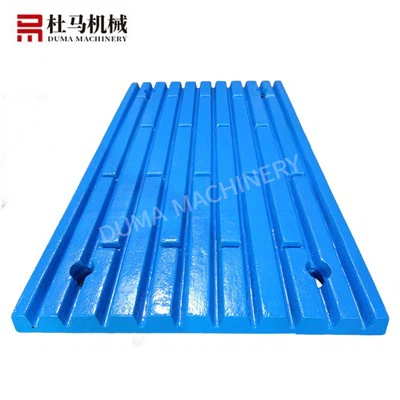
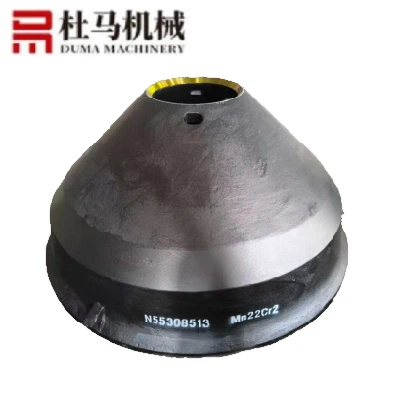
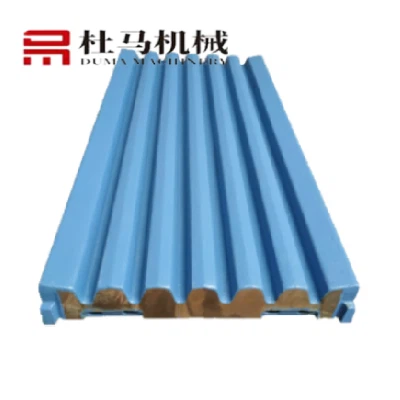
As a critical safety component within a jaw crusher, the crusher toggle plate, also widely known as the elbow plate, acts both as a mechanical force transmitter and an irreplaceable overload protection device. In high-intensity quarrying, aggregate production, and mining operations, managing the replacement costs of wear parts is always a top priority for site managers. Consequently, procurement professionals and maintenance engineers frequently ask a fundamental question: Can a crusher toggle plate be reused?
From the perspective of a direct-operating entity factory with decades of heavy casting experience, the engineering answer is nuanced: It depends strictly on the structural integrity, remaining thickness, and the metallurgical fatigue state of the plate. Reusing a component that has exceeded its plastic deformation or fatigue limit invites catastrophic frame failure. To help you balance cost-effectiveness with operational safety, we break down the definitive engineering standards for assessing toggle plate reusability and look at the underlying material science.

Critical Factors Deciding Toggle Plate Reusability
The Dynamic Material Requirements and Hardening Distinctions
The reusability of a toggle plate is heavily determined by its chemical composition and mechanical purpose. Unlike specialized wear liners such as high-manganese Jaw Plate For Crusher Wholesale series-which require a microcomputer-controlled water-toughening treatment to transform their austenitic matrix from an initial HB200 to over HB500 under heavy rock impacts-the toggle plate serves a completely different mechanical purpose.
As a structural safety fuse, the toggle plate does not rely on severe surface work-hardening. Instead, standard industry toggle plates made of high-quality gray iron, cast steel, or ductile alloys are designed to absorb structural stresses while maintaining predictable yield limits. If a toggle plate is mistakenly cast with materials that become excessively brittle or hard under impact, it loses its protective fusing ability, risking critical damage to the crusher frame. Therefore, checking for material degradation or localized micro-cracking rather than looking for a hardened surface layer is the key metallurgical criterion when determining whether a toggle plate can be safely returned to service.
Micro-Deformation and Geometric Alignment
During the crushing process, high-stress forces can cause the toggle plate to undergo subtle bending, elongation, or end-profile flattening. Even micro-scale twisting or uneven wear across the length of the plate will alter the kinematics of the jaw crusher. If a deformed toggle plate is reused, it will fail to maintain parallel alignment, causing the movable jaw to swing unevenly. This uneven distribution of force severely concentrates stresses, accelerating localized wear on the fixed jaw plates and swing jaw plates. Instead of saving money, reusing a warped toggle plate quickly leads to premature breakdown of the entire crushing chamber and uneven product granulometry.
Severity of Operational Wear Profiles
In harsh mining sites crushing highly abrasive materials like granite, basalt, or iron ore, the toggle ends-the specific curved zones that seat into the toggle blocks-experience severe friction and frictional heat. If the wear across these ends is superficial, smooth, and perfectly symmetrical, the plate can sometimes be safely flipped or re-machined to restore seating accuracy. However, if deep grooving, pitting, or localized chipping is present, the structural integrity is permanently compromised, and the part must be retired immediately.
How to Scientifically Assess a Toggle Plate Before Reusing It
Never rely on pure visual guesswork when evaluating heavy machinery components. A strict, three-step technical inspection workflow utilizing advanced diagnostic tools should be implemented before certifying any toggle plate for secondary usage.
High-Precision Dimensional Measurement
The first step requires utilizing precision calipers, micrometers, and 3D laser scanning tools to verify the current dimensions against the original original equipment manufacturer drawings or specifications. Thanks to modern manufacturing processes that utilize micron-level control of heat-treatment deformation, high-quality replacement parts maintain precise fit accuracy. Technicians must measure the overall length, thickness, and radius of the toggle ends. If these dimensions deviate beyond the maximum allowable tolerances set by mainstream brands like Metso or Sandvik, the part cannot guarantee seamless installation. For guaranteed compatibility, consider exploring our factory-direct Jaw Crusher Parts Fixed Jaw Plate range designed for precision fit.

Advanced Non-Destructive Testing
Visual inspections are entirely incapable of catching sub-surface structural fatigue or internal micro-voids. Before declaring a heavy-duty toggle plate safe for reuse, maintenance teams should execute rigorous non-destructive testing protocols. Ultrasonic testing and magnetic particle testing are highly effective at exposing hidden internal defects or deep structural cracks caused by millions of high-impact compression cycles. Additionally, penetrant testing, also referred to as dye checking or penetrant flaw detection, should be applied around high-stress boundary zones to reveal fine surface fissures that are invisible to the naked eye. If any internal or surface defects are registered, the toggle plate should be rejected.
Metallographic Evaluation for Batch Refurbishment
For large-scale mining operations or aggregate plants looking to establish a batch-refurbishment program for heavy cast wear parts, metallographic analysis provides the ultimate safety insurance. High-magnification metallographic testing using digital microscopy ensures that the internal micro-structure consists of a single, pure, and homogenous austenitic matrix. It guarantees that there is absolutely zero network carbide precipitation along the grain boundaries. Network carbides naturally cause the steel to become brittle and prone to sudden, catastrophic snapping under load. If operational overheating or improper initial cooling has triggered carbide precipitation, the plate is a ticking time bomb and must not be returned to service.
The Operational Risks of Secondary Usage
While reusing worn components offers a tempting opportunity for short-term maintenance cost reductions, deploying a compromised or fatigued toggle plate introduces severe operational liabilities that far outweigh the savings.
Catastrophic Safety and Mechanical Risks
The toggle plate is engineered to act as a mechanical fuse for the entire machine. It is designed to fracture cleanly only when an uncrushable foreign object, such as tramp iron or excavator teeth, enters the crushing chamber, thereby protecting the incredibly expensive eccentric shaft, flywheel, and main frame from warping. A fatigued, repeatedly reused toggle plate loses its predictable yield strength. It might either fracture prematurely under standard, everyday working loads-causing unexpected emergency downtime-or fail to break during a genuine uncrushable overload event, resulting in catastrophic damage to the core crusher frame and risking severe injury to nearby ground operators.
Performance Degradation and Reduced Throughput
Worn toggle plates typically exhibit altered geometries that directly shorten or distort the stroke of the moving jaw. When the stroke dynamics are compromised, the force transmission becomes inefficient. This results in a highly noticeable drop in the crusher's hourly tons-per-hour output, increased recirculating loads, and a dramatic spike in electrical energy consumption per ton of crushed material. Furthermore, it causes the jaw crusher to work harder to achieve the same reduction ratio, placing unnecessary stress on the bearings.
Streamline Your Crusher Lifespan with Direct-Factory Support
When a rigorous inspection reveals that reusing your old components is no longer a safe or viable option, partnering directly with an established China Jaw Plate For Crusher Manufacturers Suppliers Factory is the most cost-effective long-term strategy for your business. Partnering directly with a dedicated, direct-operating entity factory-rather than an intermediate trading company-ensures that you eliminate unnecessary middleman markups while receiving total technical traceability and uncompromised quality.
Modern casting facilities utilize massive pattern reserves, housing thousands of sets of molds that cover global mainstream crusher models. This expansive archive allows for the rapid production and dispatch of exact-fit replacement parts for popular series, including Metso C-series jaw crushers and Sandvik CJ-series machines, ensuring a ready-to-use seamless fit that requires no on-site grinding. Standard items are kept in large inventories for immediate shipment within 7 to 10 days, while fully customized orders developed via reverse engineering from worn sample blocks are completed within 35 to 45 days.
Every premium casting is backed by rigorous quality assurance, including a comprehensive 12-month quality warranty against structural casting defects. Whether your operation requires a large-scale wholesale batch supply or you prefer to initiate a small trial order to evaluate the work-hardening performance and abrasive resistance in your specific quarry environment, factory-direct engineering teams are available to provide material composition reports, customized tooth profile suggestions, and comprehensive technical support every step of the way.