In heavy-duty aggregate production, mining, and concrete recycling circuits, jaw crushers serve as the primary defensive line for particle size reduction. Operating under relentless, high-velocity compressive and high-impact forces, the jaw plates inside these machines endure severe mechanical stress. The impact resistance of jaw crusher liners is the definitive technical factor governing operational efficiency, equipment safety, and cost-per-ton metrics.
When liners lack sufficient impact toughness, they do not merely wear down faster; they suffer from premature micro-cracking, structural spalling, or catastrophic brittle fractures that can warp the main crusher frame. Optimizing this performance requires a multi-faceted approach blending precise foundry metallurgy, geometric design, and structured site maintenance.

Precision Metallurgical Selection and Micro-Alloying
The baseline impact resistance of a crusher liner is forged inside the induction furnace ladle. High-manganese steel remains the industry standard material for this application due to its unique work-hardening capabilities. However, low-grade foundries often use unrefined scrap iron with high levels of tramp elements like phosphorus and sulfur. Excessive phosphorus creates weak, brittle molecular boundaries that fail instantly when struck by large, hard run-of-mine feed materials.
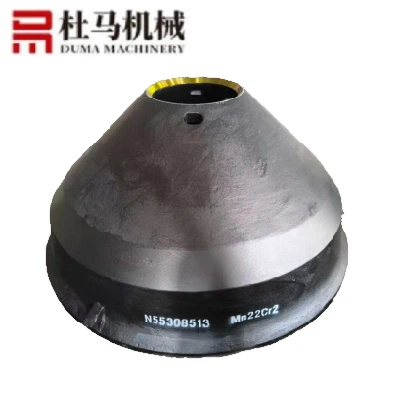
To maximize structural integrity, high-performance Wearing Spare Parts Jaw Plates series utilize strictly controlled alloy compositions, such as Mn18Cr2 or Mn22Cr2. Introducing precision additions of chromium and molybdenum increases the material's yield strength and initial hardness without sacrificing its core ductility. When these optimized alloys encounter high-stress rock impacts, their internal crystal structure undergoes a rapid transformation. The surface layer quickly hardens from an initial HB200 to over HB500, creating an iron-clad outer barrier that deflects gouging abrasion, while the soft internal matrix retains its supreme shock-absorbing toughness.
Advanced Microcomputer-Controlled Water Toughening
Raw high-manganese castings are naturally brittle upon cooling due to the formation of thick, isolated network carbides along the grain boundaries. Unlocking the true impact resistance of the liner requires a specialized thermal process. Unlike standard carbon or alloy steels that rely on conventional oil quenching and tempering-which would cause rapid carbide precipitation and ruin high-manganese variants-crusher liners must undergo a controlled solution heat treatment, universally known as water toughening.
The cast plates are placed into microcomputer-governed furnaces and heated along a rigid, step-up temperature profile until they surpass 1050 to 1100 degrees Celsius. Holding the liners at this extreme temperature dissolves all primary brittle carbides completely into the iron matrix, creating a homogenous austenitic structure. Once this molecular state is reached, the liners are instantly plunged into a high-capacity water-quenching pool. High-power circulation pumps force a massive flow of cold water around the steel, freezing the pure austenitic microstructure in place. This exact process gives the liner its incredible, near-indestructible resistance against severe operational impacts.
Geometric Design Optimization and Stress Distribution
Material excellence must be supported by strategic geometric engineering to prevent localized stress concentration. Modern foundries discard generic, uniform-thickness designs in favor of application-specific jaw plate profiles engineered through computer-aided design and finite element analysis. By simulating real-world crushing forces, engineers can map exactly where the heaviest impact energy enters the crushing chamber.
Optimizing the profile of the jaw plate teeth is highly effective at managing these forces. For instance, sharp, high-profile corrugated teeth provide an intense localized biting force that splits hard, brittle boulders quickly using minimal machine energy. For slabby, high-impact materials, a thick, slightly curved tooth profile helps distribute the crushing shock over a broader surface area, reducing the risk of tooth shearing. Furthermore, integrating variable thickness designs-making the lower third of the jaw plate thicker where the final compression occurs-prevents premature mid-body thinning and balances the wear profile across the entire length of the component.
Backing Compound Integration and Precise Installation Fits
Even a metallurgically perfect liner will crack if it is installed incorrectly. When a jaw plate experiences thousands of tons of dynamic compression, any micro-gaps between the back of the liner and the crusher's jaw stock will cause localized deflections. These repeated micro-flexing movements introduce rapid fatigue cycles, eventually causing the cast liner to snap down its center line.
Achieving superior field reliability requires ensuring a micro-precise dimensional fit during production. High-quality foundries utilize advanced heavy-duty vertical milling and grinding machinery to turn the rear mounting faces to tight tolerances. During site installation, operators must thoroughly clean the jaw stock and apply a high-durability epoxy backing compound gel. This backing layer acts as a structural shock absorber, filling all remaining micro-voids and guaranteeing that impact forces are transferred evenly across the entire machine frame. Securing the Jaw Plate Casting assemblies with correct OEM torque values prevents loosening during high-vibration crushing, neutralizing a primary cause of premature liner failure.

Proactive Site Maintenance and Chamber Management
Maintaining high impact resistance is an operational responsibility that continues long after the liners are bolted into the machine. Unmanaged changes inside the crushing chamber can drastically alter stress levels and destroy wear parts. One critical hazard is running the crusher under "non-choke" conditions, where rock drops directly into the lower zone from excessive heights. This creates a high-velocity localized impact that can gouge out pieces of the liner before it has a chance to work-harden.
Implementing a structured inspection schedule is mandatory for high-tonnage plants. Maintenance teams must routinely scan the liners for fine surface fissures, loose wedge bolts, or uneven localized wear. If deep gouging or localized tooth flattening is caught early, the plates can often be flipped vertically (moving the worn bottom section to the top) to equalize the wear profile and extend safe service life. Utilizing premium, field-proven Jaw Swing&Fixed Plates Mn13 sets ensures that operators have an ultra-tough, reliable base material that resists rapid deformation, making routine adjustments simple and preventing sudden emergency shutdowns.
Maximize Your Liner Lifespan with Duma Factory Capabilities
Sourcing replacement parts directly from an asset-owning, direct-operating entity factory like Duma is the most dependable strategy to optimize your wear parts procurement. Operating a fully integrated, 42,000 square meter production facility certified under ISO 9001:2015 standards, Duma manages the entire manufacturing chain-from raw material induction melting and automated step water-toughening to precision machining and rigorous non-destructive testing-completely in-house.
With an extensive archive exceeding 4,000 sets of pattern molds, we provide drop-in, exact-fit compatibility for all major global crushing platforms, including Metso C-series, Sandvik CJ-series, Terex, and more. For high-demand, standard equipment lines, we maintain substantial bulk inventories enabling immediate shipment within 7 to 10 days to drastically shorten your warehouse turnaround. For specialized operational environments or unique tooth configurations, our engineering team uses reverse engineering from worn samples to manufacture custom solutions within a reliable 35 to 45-day production cycle.
Every wear liner we manufacture is backed by a comprehensive 12-month quality warranty against structural casting defects. Whether you are seeking a large-scale wholesale supply or wish to place a small trial order to evaluate our field lifespan under your local quarrying conditions, our technical team is ready to provide material certificates, cavity optimization suggestions, and direct support through every stage of your operation.