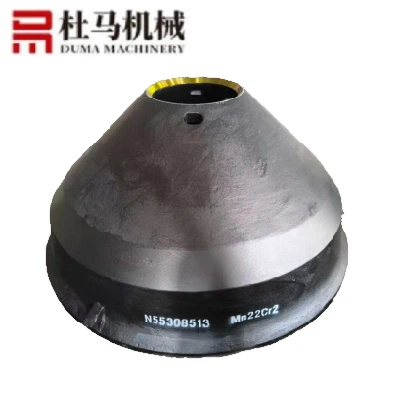
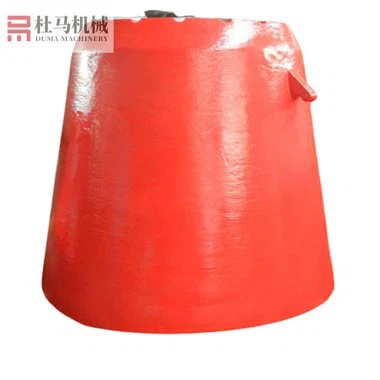
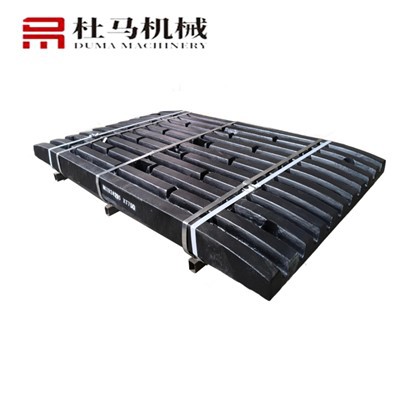
For global mining operators, quarry managers, and heavy equipment parts distributors, the operational efficiency of crushing machinery directly dictates profitability. Among all critical components, high manganese steel wear parts-such as cone crusher mantles, bowl liners, and jaw plates-serve as the frontline defense against severe impact and abrasive wear. High manganese steel alloys (including Mn13, Mn18, and Mn22) remain the undisputed industry standard due to their unique, inherent ability to work-harden under intense operational stress.
However, in the global procurement marketplace, the quality of manganese castings varies drastically. Substandard components lead to premature cracking, accelerated wear, and catastrophic equipment failures, which translate into tens of thousands of dollars in unscheduled downtime. As an ISO 9001:2015 certified direct-manufacturing foundry spanning over 42,000 m², Duma implements a rigorous, multi-stage quality control protocol. In this comprehensive technical guide, we break down the definitive scientific methods required to test, verify, and guarantee the quality of high manganese crusher liners before they ever arrive at a mine site.

Metallographic Testing: Eliminating Destructive Carbide Networks
The true performance and lifespan of a high manganese liner are determined long before it strikes its first rock; its fate is sealed within its microscopic crystalline structure. In its raw, as-cast state, manganese steel contains brittle grain-boundary carbides. If these carbides are not completely dissolved, they create internal stress concentration points, causing the liner to fracture prematurely under heavy operational impact.
At Duma, we prioritize metallographic testing as our foundational quality defense line.
- The Testing Protocol: Our quality control team utilizes high-magnification metallographic microscopes coupled with specialized digital image analysis software to inspect the micro-texture of the steel matrix.
- Strict International Standards: We evaluate and grade each batch in strict accordance with international benchmarks such as ASTM A128 and GB/T 13932.
- The Solution: To eliminate the brittle carbides, the castings must undergo an automated, microcomputer-controlled solution heat treatment process featuring "step-by-step heating" and precise temperature holds. This is immediately followed by a high-power water quenching process (water toughening). Our facility utilizes high-volume, forced circulation pumps to ensure rapid, uniform cooling. This precise control guarantees a pure, single Austenite microstructure entirely free of network carbide precipitation, ensuring the finished product is "tough but not brittle."
2. Brinell Hardness Verification & Work-Hardening Evaluation
Hardness testing for high manganese steel requires a deep understanding of metallurgy, as its behavior differs significantly from standard carbon steel or high-chromium iron.
Optimized Initial Hardness: Following successful water-toughening heat treatment, the initial delivery hardness of our high manganese liners is systematically verified using precise Brinell hardness testers. The ideal baseline hardness must sit at approximately HB200. If the initial hardness is too high, the material becomes excessively brittle ; if it is too low, it lacks the foundational resistance needed for the initial cycles of crushing.
Unlocking Work-Hardening Potential: The signature commercial advantage of premium high manganese steel is its rapid work-hardening capability under heavy, repetitive compressive shock loads. While the underlying core of the liner remains ductile to absorb massive energy impacts , the localized surface layer undergoes a structural transformation, rapidly escalating its hardness from HB200 to over HB500. Duma's quality assurance department runs consistent batch testing to ensure that the chemical homogeneity of the casting allows for uniform, maximum work-hardening potential across all wear zones.
3. Micro-Level Dimensional Inspection for Flawless Fit Accuracy
A crusher liner that exhibits exceptional wear resistance is practically useless if it does not fit perfectly into the machine's head or adjustment ring. High-temperature heat treatments and intense quenching phases inevitably introduce thermal expansion and structural deformation.
To counteract this, Duma routes all quenched castings through our dedicated, high-precision machining workshop.
Micron-Level Tolerance Control: We utilize advanced industrial measuring instruments to check critical dimensional parameters-including length, thickness, taper angles, and seating surfaces. Tolerances are controlled strictly at the micron level to compensate for any heat-treatment deviations.
"Ready-to-Use" Guarantee: This meticulous process guarantees absolute Fit Accuracy with major global OEM crusher brands, including Metso (C-Series jaw crushers, HP/GP Series cone crushers) and Sandvik (CJ, CH/CS Series). By achieving seamless mechanical compatibility, we provide our global customers with a true "Ready-to-Use" product, completely eliminating the need for costly, time-consuming on-site grinding or modifications during liner replacement.
4. Advanced Non-Destructive Testing (NDT) for Hidden Internal Flaws
Surface-level visual inspection is excellent for detecting immediate cosmetic defects, superficial gas pores, or macroscopic sand inclusions. However, the most dangerous casting defects-such as deep internal shrinkage cavities, sub-surface blowholes, or micro-cracks-remain completely invisible to the naked eye. Under the brutal pressure of a mining operation, these hidden voids act as structural fault lines.
To safeguard our clients against internal structural failures, Duma deploys a full suite of Non-Destructive Testing (NDT) methodologies:
- Ultrasonic Testing (UT): This represents our primary method for auditing heavy-section castings. High-frequency sound waves are transmitted through the metal matrix to scan the internal volume of high-thickness areas, confirming a 100% solid, continuous interior structure with zero internal voids.
- Magnetic Particle Testing (MT) & Penetrant Testing (PT): These specialized methods are methodically applied to high-stress junctions, radii, and core edges to capture any ultra-fine surface or near-surface fissures that bypass traditional visual audits.
5. End-to-End Batch Traceability: The True Industry Benchmark
For modern industrial operations, global procurement is built entirely upon transparency and data-backed accountability. Trading intermediaries and small-scale brokerages often source their products from multiple unverified workshops, resulting in inconsistent quality across batches.
Because Duma retains complete, in-house control over the entire production lifecycle-from raw material scrap selection and microcomputer-controlled smelting to heat treatment and final machining-we provide comprehensive technical traceability. Every individual wear component shipped from our factory is permanently stamped with a unique tracking serial number. This code maps directly to a complete digital technical archive containing:
Official Material Test Reports (MTR) verifying exact chemical composition (Mn, C, Cr, etc.).
Comprehensive Dimensional Inspection sheets documenting fit parameters.
Real-time Heat Treatment Time-Temperature Curves proving proper solution holding times.
High-resolution Metallographic Evaluation Reports certifying correct Austenite microstructure development.

Why Sourcing Directly from an Authentic Foundry Protects Your Bottom Line
Investing in high-quality crusher parts is not just an equipment maintenance decision; it is a critical strategy to optimize your cost-per-ton production efficiency. Sourcing components directly from an established manufacturing foundry eliminates unnecessary middleman markups and guarantees that every single shipment conforms to identical, verifiable engineering standards.
Duma's massive industrial footprint houses an expansive pattern library containing over 4,000 distinct molds. This extensive inventory allows us to maintain stable, large-scale stock configurations for standard, high-demand profiles (such as HP200, HP300, HP400, C80, and C100), enabling swift 7 to 10-day shipping cycles to minimize your emergency downtime. For specialized geological challenges, our in-house engineering team provides tailored material modifications-including upgraded Mn22 formulations or premium TiC (Titanium Carbide) inserts-engineered specifically to match the abrasive profiles of your specific ore.
Are you ready to extend the wear-life of your crusher components by 20% to 40%? Contact the Duma technical consultation team today to request a comprehensive wear analysis and discover how our certified engineering standards can streamline your mining workflow.