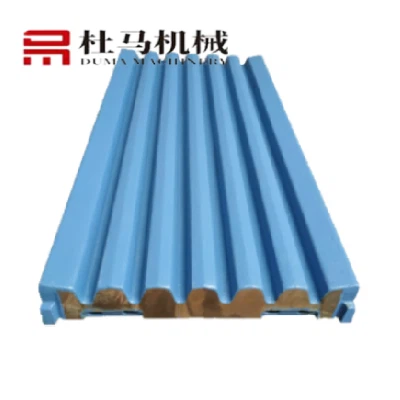
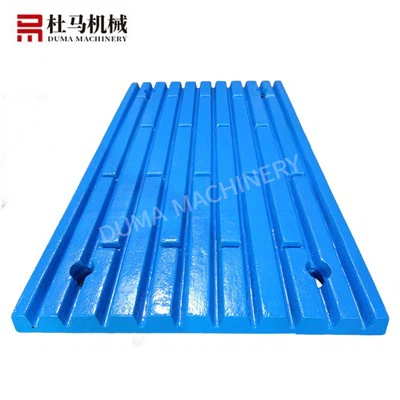
Crusher stability is important for maintaining consistent production, protecting equipment, and controlling maintenance costs. Although many factors affect the stability of a crushing plant, the condition and design of crusher liners should not be overlooked.
Manganese steel is widely used for crusher liners because it combines toughness with good wear resistance and work hardening characteristics. When correctly matched to the crusher and application, manganese liners can help maintain the intended crushing chamber geometry, support consistent material flow, and reduce problems caused by excessive or uneven wear.
However, manganese liners do not directly eliminate vibration or absorb all crushing energy. Their main contribution to stable operation comes from maintaining the correct working surfaces and resisting the mechanical and abrasive forces generated during crushing.

How Crusher Liners Affect Stability
Crusher liners are installed inside the crushing chamber and are exposed to continuous impact and compression from the material being processed. As liners wear, their original profile gradually changes.
Excessive or uneven wear can affect the geometry of the crushing chamber. This may change how material enters and moves through the crusher, which can influence crushing efficiency and load distribution.
A properly selected liner helps maintain the intended crushing profile for a longer period. This supports more consistent operation and allows the crusher to work within its designed operating conditions.
For cone crushers, the mantle and concave work together to compress material inside the crushing chamber. Selecting the correct Mantle For Cone Crusher and matching it with the appropriate concave is therefore important for maintaining consistent crushing performance.
Work Hardening and Wear Resistance of Manganese Steel
One of the main reasons manganese steel is widely used for crusher liners is its work hardening behavior.
Under repeated impact and compressive loading, the working surface of manganese steel can become harder during operation while the material beneath the surface retains greater toughness. This combination makes manganese steel suitable for many applications where crushing forces and abrasive wear occur continuously.
The exact performance depends on the material grade, heat treatment, crusher design, and operating conditions. Common manganese grades include Mn13Cr2, Mn18Cr2, and Mn22Cr2, with the appropriate choice depending on the application.
A liner that maintains its working surface effectively can help the crusher operate more consistently over its service interval. This is particularly important in mining and quarrying operations where crushers may run for long periods without interruption.
Maintaining a Consistent Crushing Chamber
Crusher stability is closely related to the condition of the crushing chamber.
As a liner becomes heavily worn, its profile changes. Excessive wear can alter the relationship between the mantle and concave or between the fixed and moving jaws, depending on the type of crusher.
This can lead to changes in:
- Material flow
- Crushing efficiency
- Product size distribution
- Load conditions
- Power consumption
Replacing liners at the appropriate wear point helps maintain the intended chamber configuration.
For this reason, liner maintenance should not simply be based on whether the component is still physically usable. Operators should also consider how wear has changed the working profile and whether crusher performance has begun to decline.
Why Uniform Wear Matters
Uneven liner wear can create additional operating problems. If one area of a liner wears substantially faster than another, the crushing chamber may no longer operate with the intended geometry.
Several factors can contribute to uneven wear, including:
- Uneven feed distribution
- Incorrect liner selection
- Improper installation
- Material characteristics
- Incorrect operating conditions
A well designed liner can help distribute crushing forces more effectively, but liner design alone cannot eliminate uneven wear caused by poor feeding or unsuitable operating practices.
Regular inspections can identify abnormal wear patterns early. This allows operators to investigate the cause before it leads to more serious equipment problems.
Correct Fit and Installation Are Essential
A high quality manganese liner must also fit the crusher correctly.
Liners are manufactured for specific crusher models and configurations. Dimensions, mounting surfaces, profiles, and other design features need to match the equipment.
An improperly fitted liner can create installation problems and may affect load distribution during operation. For replacement parts, buyers should provide the crusher model, original part number, drawings, or other technical information whenever available.
An experienced wear parts manufacturer can use this information to confirm compatibility before production.
How Stable Liner Performance Reduces Downtime
Crusher stability and maintenance efficiency are closely connected.
When liners wear too quickly or develop abnormal wear, operators may need to stop the crusher more frequently for inspection or replacement. Each unplanned shutdown can affect production schedules and increase maintenance costs.
Longer and more predictable liner service life helps maintenance teams plan replacement work more effectively.
Manganese liners are not designed to last indefinitely, but selecting the appropriate material grade and profile can help achieve a service life that is better matched to the application.
For demanding crushing conditions, Duma Machinery also provides manganese and specialized wear solutions designed according to customer requirements and crusher operating conditions.

Choosing the Right Manganese Crusher Liner
The best liner is not necessarily the one with the highest hardness or the lowest purchase price. Selection should be based on the complete crushing application.
Important information includes:
Crusher Model
The crusher model determines the required liner dimensions and configuration.
Material Characteristics
Hardness, abrasiveness, feed size, and material type all influence liner wear.
Operating Conditions
Feed rate, operating hours, and crushing conditions should be considered when evaluating liner performance.
Previous Wear Results
Historical wear data can be especially useful. Comparing service life, processed tonnage, and wear patterns allows buyers and manufacturers to make better decisions about future liner specifications.
Conclusion
Manganese crusher liners can contribute to stable crusher operation primarily by providing durable working surfaces and helping maintain the designed crushing chamber geometry.
Their wear resistance, toughness, and work hardening characteristics make manganese steel suitable for many demanding crushing applications. However, stable operation also depends on correct liner selection, proper installation, balanced feeding, and regular wear monitoring.
For mining, quarrying, and aggregate operations, the most effective approach is to select liners according to the crusher model, feed material, operating conditions, and actual wear history. A properly matched liner can help maintain consistent crushing performance, reduce unexpected maintenance, and support more predictable production.