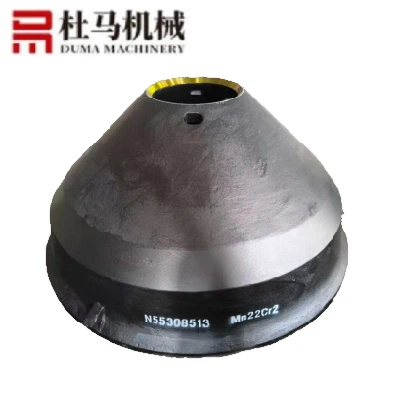
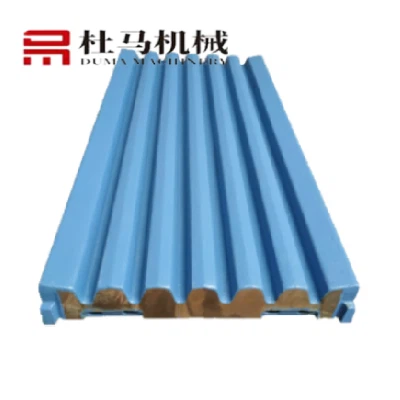
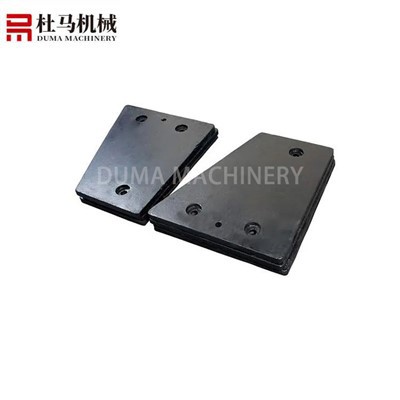
Hey there! I'm a supplier of Crusher Jaw Plate Casting, and today I wanna chat about how the chemical composition affects the performance of these casting parts.
First off, let's understand what Crusher Jaw Plate Casting is all about. Crusher jaw plates are crucial components in jaw crushers. They come in two main types: the fixed jaw plate and the movable jaw plate. You can check out more about Fixed And Moveable Jaw Plate. These plates work together to crush various materials, like rocks, ores, and minerals. The performance of these jaw plates directly impacts the efficiency and productivity of the entire crushing operation.


Now, let's dig into the chemical composition. The chemical elements in the casting play a huge role in determining the properties and performance of the jaw plate. One of the most important elements is carbon. Carbon is a key player in the hardness and strength of the jaw plate. A higher carbon content generally means greater hardness. Hardness is super important because it allows the jaw plate to resist wear and abrasion when it's crushing hard materials. But here's the catch: too much carbon can make the jaw plate brittle. If it's too brittle, it might crack or break under the high stress of the crushing process. So, finding the right balance of carbon is essential.
Another element that matters a lot is manganese. Manganese is known for its ability to enhance the toughness of the jaw plate. When manganese is added to the casting, it forms a tough and wear - resistant structure. This is especially useful when the jaw plate is dealing with impact loads during the crushing process. Manganese helps the jaw plate absorb the energy from the impacts without getting damaged easily. For instance, in a jaw crusher that's used to crush large and hard rocks, a jaw plate with a proper amount of manganese can last much longer compared to one without it. You can learn more about different types of jaw plates like Jaw Fixed Plate And Swing Plate.
Chromium is also an important element in the chemical composition of Crusher Jaw Plate Casting. Chromium is great for improving the corrosion resistance of the jaw plate. In some industrial settings, the materials being crushed might contain chemicals or moisture that can cause corrosion. A jaw plate with a sufficient amount of chromium can withstand this corrosion and maintain its performance over time. Moreover, chromium can also contribute to the hardness and wear resistance of the jaw plate, similar to carbon. However, just like with carbon, adding too much chromium can have negative effects. It might make the casting more difficult to machine and could also reduce its ductility.
Nickel is another element that can be added to the casting. Nickel helps to improve the toughness and ductility of the jaw plate. It can also enhance the impact resistance, especially at low temperatures. In cold environments, a jaw plate with nickel in its composition is less likely to become brittle and break. This is important for crushers that operate in regions with cold climates or for applications where the crushed materials are cooled during the process.
The combination of these elements in the right proportions is what makes a high - performance Crusher Jaw Plate Casting. For example, a common alloy used in jaw plate casting is high - manganese steel. This alloy typically contains around 12 - 14% manganese and a small amount of carbon. The high manganese content gives it excellent toughness and work - hardening properties. When the jaw plate is in operation, the surface of the plate gets work - hardened under the impact of the crushed materials, which further improves its wear resistance.
Now, let's talk about how these chemical compositions affect the different performance aspects of the jaw plate.
Wear Resistance
As mentioned earlier, elements like carbon, manganese, and chromium all contribute to the wear resistance of the jaw plate. The wear resistance is crucial because it determines how long the jaw plate can last before it needs to be replaced. A jaw plate with good wear resistance can save a lot of money in the long run for the operators of the jaw crusher. They don't have to keep replacing the jaw plates frequently, which reduces downtime and maintenance costs. For example, if a jaw plate is made of a high - chromium alloy, it can resist the abrasion caused by the sharp edges of the crushed rocks much better than a plate with a lower chromium content. You can find more details about specific types of jaw plates such as Jaw Crusher Parts Fixed Jaw Plate.
Toughness and Impact Resistance
Toughness is the ability of the jaw plate to absorb energy without breaking. Elements like manganese and nickel are key to enhancing the toughness of the jaw plate. In a jaw crusher, the jaw plates are constantly subjected to high - impact loads when crushing large and hard materials. A tough jaw plate can withstand these impacts without cracking or fracturing. This is important for the safety and reliability of the crushing operation. If a jaw plate breaks during operation, it can cause damage to the crusher and even pose a safety hazard to the operators.
Corrosion Resistance
In some industries, the crushed materials might contain corrosive substances. For example, in the mining industry, the ores being crushed might have traces of sulfur or other chemicals. A jaw plate with good corrosion resistance can prevent rust and degradation, which helps to maintain its performance over time. Chromium and nickel are the main elements that contribute to the corrosion resistance of the jaw plate.
In conclusion, the chemical composition of Crusher Jaw Plate Casting has a profound impact on its performance. The right combination of elements like carbon, manganese, chromium, and nickel can result in a jaw plate that has excellent wear resistance, toughness, and corrosion resistance. As a supplier of Crusher Jaw Plate Casting, I understand the importance of getting the chemical composition right. We use advanced manufacturing techniques and strict quality control measures to ensure that our jaw plates have the optimal chemical composition for the best performance.
If you're in the market for high - quality Crusher Jaw Plate Casting, I'd love to have a chat with you. Whether you need a specific type of jaw plate for your unique crushing application or you have questions about the chemical composition and performance, feel free to reach out. Let's work together to find the perfect solution for your crushing needs.
References
- "Materials Science and Engineering: An Introduction" by William D. Callister Jr. and David G. Rethwisch
- "Handbook of Crushing" by E. G. Herbst, R. L. Brown, and R. E. Rowland