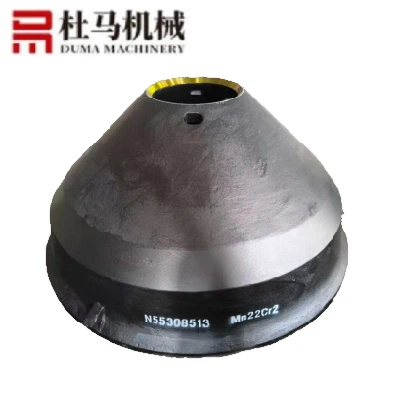
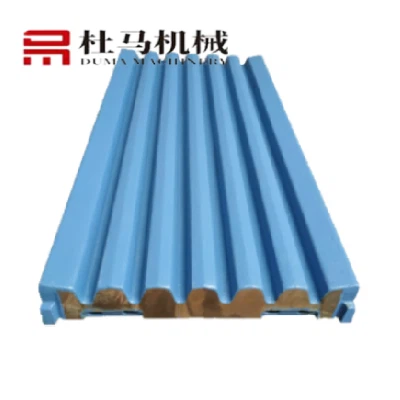
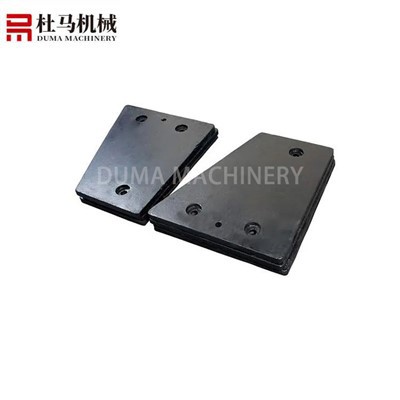
Yo, what's up everyone! I'm a supplier of jaw plates for crushers, and today I wanna chat about how the shape of these jaw plates can really impact the crushing efficiency. It might not seem like a big deal at first, but trust me, it makes a world of difference.
First off, let's talk about what a jaw crusher is and what it does. A jaw crusher is a machine that's used to break down large rocks into smaller pieces. It works by squeezing the rocks between two jaw plates - one fixed and one movable. The rocks get crushed as the movable jaw plate moves back and forth against the fixed one. Now, the shape of these jaw plates can affect how well this whole process works.
One of the most common shapes for jaw plates is the straight face design. These straight-faced jaw plates are pretty simple. They have a flat surface that comes into contact with the rocks. This design is great for primary crushing, where you're dealing with really large rocks. The straight face allows for a big initial bite, which means you can start breaking down those huge chunks right away. When you use straight-faced jaw plates, the rocks get a more direct impact, and it's easier to break them into more manageable sizes. If you're looking for high manganese jaw crusher parts with a straight face design, you can check out High Manganese Jaw Crusher Parts.
But here's the thing, straight-faced jaw plates aren't always the best for every situation. For example, if you're dealing with rocks that are a bit more brittle or have a specific structure, a straight face might not give you the most efficient crushing. That's where other shapes come in.
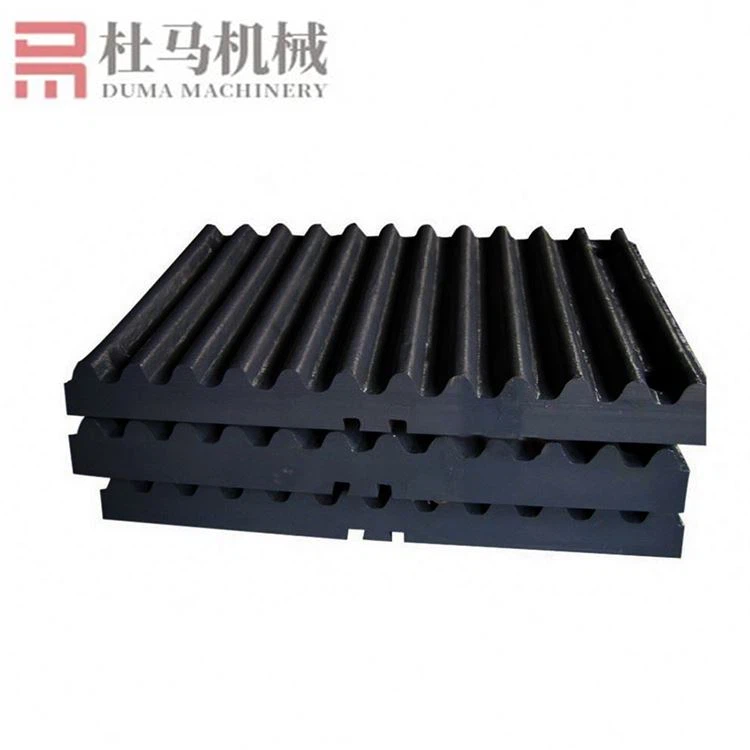

Another popular shape is the corrugated or serrated jaw plate. These jaw plates have ridges or teeth on the surface. The corrugated design helps to grip the rocks better. When the movable jaw plate moves, these ridges and teeth dig into the rocks, providing a more secure hold. This is especially useful when you're crushing rocks that are hard to break or have a slippery surface. The corrugated jaw plates can prevent the rocks from slipping out during the crushing process, which means you get a more consistent and efficient crush. You can find some great fixed and moveable jaw plates with a corrugated design at Fixed And Moveable Jaw Plate.
The shape of the jaw plates also affects the particle size distribution of the crushed material. If you want a more uniform particle size, the shape of the jaw plates matters a lot. For instance, a concave-shaped jaw plate can be used to achieve a more consistent particle size. The concave shape guides the rocks towards the center of the crushing chamber, and as they're crushed, they tend to break into more evenly sized pieces. This is really important in industries where a specific particle size is required, like in the construction or mining industries.
Now, let's talk about wear and tear. The shape of the jaw plates can have a huge impact on how long they last. A well-designed jaw plate shape can distribute the wear more evenly. For example, if the shape allows the rocks to flow smoothly through the crushing chamber, there won't be as much concentrated wear in one area. This means the jaw plates will last longer, and you won't have to replace them as often. That's a big deal because replacing jaw plates can be expensive and time-consuming. You can find some wearing spare parts jaw plates that are designed to minimize wear at Wearing Spare Parts Jaw Plates.
The angle of the jaw plates is also a crucial factor. The angle between the fixed and movable jaw plates determines the nip angle. A smaller nip angle means the rocks are held more tightly between the jaw plates, which can lead to more efficient crushing. However, if the nip angle is too small, it can cause the rocks to get stuck in the crushing chamber. On the other hand, a larger nip angle allows for a greater throughput of rocks, but the crushing force might not be as strong. So, finding the right balance is key.
In addition to the basic shapes, there are also custom-designed jaw plates. Sometimes, the standard shapes just won't cut it for a particular application. That's when custom shapes come in handy. We can design jaw plates based on the specific requirements of your crusher and the type of rocks you're dealing with. Maybe you need a jaw plate with a unique pattern to handle a certain type of rock more efficiently. Or perhaps you need a jaw plate that can withstand extreme wear and tear in a high-volume crushing operation. Whatever the case, custom-designed jaw plates can give you that extra edge in terms of crushing efficiency.
So, as you can see, the shape of the jaw plates for a crusher is a really important factor that can't be overlooked. It affects everything from the initial breakdown of the rocks to the final particle size and the lifespan of the jaw plates. If you're in the market for jaw plates, whether it's for a new crusher or to replace old ones, make sure you consider the shape carefully.
If you're interested in learning more about our jaw plates or want to discuss your specific needs, don't hesitate to reach out. We're here to help you find the best jaw plates for your crusher to maximize your crushing efficiency. Whether you need high manganese jaw crusher parts, fixed and movable jaw plates, or wearing spare parts jaw plates, we've got you covered. So, let's start a conversation and see how we can work together to improve your crushing operation.
References
- "Crushing Equipment Handbook" - A comprehensive guide on the working principles and components of crushers.
- "Mining and Quarrying Journal" - Articles on the latest advancements in crusher technology and the impact of jaw plate design.