As a supplier of Cone Crusher Liners, I've witnessed firsthand the impact that these crucial components have on the efficiency and longevity of cone crushers. Cone crusher liners play a vital role in the crushing process, and their performance directly affects the quality of the final product. However, like any other machine part, they are prone to several common problems that can hinder operations and result in increased costs. In this blog, we'll explore some of these prevalent issues to help you better understand how to manage and potentially prevent them.
1. Wear and Tear
One of the most common problems with cone crusher liners is wear and tear. The nature of their function exposes them to extremely high levels of abrasion, as they are responsible for breaking down hard materials such as rocks and ores. Over time, this constant friction between the liner and the crushed material leads to the gradual removal of material from the liner surface.
Uneven wear is a particularly troublesome aspect. It can occur due to factors such as uneven feed distribution, improper crusher setting, or the presence of irregularly shaped materials. When wear is uneven, the performance of the cone crusher is negatively affected. The uneven surface can cause inconsistent particle size in the crushed product, reducing the overall quality. Moreover, it can lead to increased stress on certain parts of the crusher, potentially causing premature failure of other components.
To mitigate wear and tear, it's crucial to ensure proper feeding of the crusher. A consistent and even feed distribution helps to spread the wear more evenly across the liner surface. Regular inspection of the liners is also essential. By monitoring the wear patterns, you can identify potential issues early and take corrective action, such as adjusting the crusher settings or replacing the liners before they cause more significant problems.
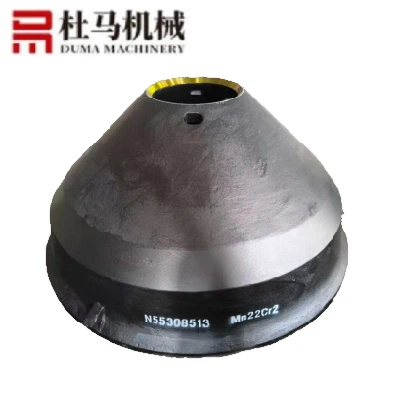
If you're looking for high - quality Cone Crusher Parts Bowl Liner, we offer a range of products designed to withstand the rigors of the crushing process and provide long - lasting performance.
2. Cracking and Fracturing
Cracking and fracturing are serious problems that can occur in cone crusher liners. These issues can be caused by a variety of factors, including excessive stress, impact loading, and material defects.
Excessive stress can build up in the liners due to overloading the crusher or operating it at incorrect settings. When the crusher is fed with more material than it can handle or operates at a very tight closed - side setting, the forces acting on the liners increase significantly. This can lead to the formation of cracks over time.
Impact loading is another culprit. During the crushing process, large or hard pieces of material can strike the liner with considerable force. These repeated impacts can cause micro - cracks to form, which can then propagate and lead to full - scale fracturing.
Material defects, such as inclusions or internal voids in the liner material, can also make the liner more susceptible to cracking. Poor manufacturing processes or the use of substandard raw materials can result in these defects.
Once a crack or fracture occurs, it can quickly worsen, leading to liner failure. A cracked liner not only affects the crushing performance but can also pose a safety hazard. Pieces of the liner can break off and damage other parts of the crusher or be ejected from the machine. It is important to use high - quality liners made from reliable materials. Our Crusher Parts Bowl Liner And Concave are manufactured using advanced techniques and high - grade materials to minimize the risk of cracking and fracturing.
3. Liner Loosening
Liner loosening is a common problem that can have a significant impact on the operation of a cone crusher. Liners are typically held in place by bolts, wedges, or other fastening mechanisms. Over time, the constant vibration and shock generated during the crushing process can cause these fasteners to loosen.
When a liner becomes loose, it can move within the crusher housing. This movement can lead to uneven wear on the liner itself and on other parts of the crusher. It can also cause misalignment, which affects the crushing efficiency and the quality of the final product. In addition, a loose liner can create noise and potentially cause damage to the crusher structure.
To prevent liner loosening, regular inspection of the fastening mechanisms is necessary. Tightening the bolts or adjusting the wedges at appropriate intervals can help to keep the liners securely in place. Some modern cone crushers are also designed with features that help to minimize vibration and reduce the likelihood of liner loosening.
If you're experiencing problems with liner loosening, our team can provide guidance on proper installation and maintenance techniques. We also offer Crusher Parts Mantle And Bowl Liner that are designed to fit snugly and securely in the crusher, reducing the risk of loosening.
4. Erosion and Corrosion
Erosion and corrosion can also affect cone crusher liners, especially in environments where the crushed materials contain abrasive or corrosive substances. Erosion occurs when small particles in the crushed material are carried by the fluid (such as water or dust) and wear away the liner surface. This is more likely to happen in crushers that are used for wet crushing or in dusty environments.
Corrosion, on the other hand, is a chemical reaction that occurs when the liner material comes into contact with corrosive substances. For example, in some mining applications, the crushed ores may contain acidic or alkaline compounds that can corrode the liner.
Erosion and corrosion can weaken the liner structure, reducing its thickness and strength. This not only shortens the liner's service life but can also lead to other problems such as cracking and fracturing. To protect against erosion and corrosion, special coatings can be applied to the liner surface. Our company offers liners with advanced coating technologies that provide excellent resistance to these types of damage.
5. Incorrect Installation
Incorrect installation of cone crusher liners can lead to a host of problems. If the liners are not installed properly, they may not fit correctly within the crusher housing. This can result in uneven stress distribution, which in turn can cause premature wear and cracking.


Improper alignment of the liners can also affect the crushing performance. The gap between the mantle and the bowl liner needs to be set correctly to ensure the desired particle size of the crushed product. If the gap is too wide or too narrow, the crusher may produce oversized or undersized particles, respectively.
To avoid installation - related problems, it's important to follow the manufacturer's installation instructions carefully. Our technical support team is available to provide assistance and guidance during the installation process to ensure that the liners are installed correctly.
Conclusion
Cone crusher liners are essential components of cone crushers, but they are subject to various common problems such as wear and tear, cracking and fracturing, liner loosening, erosion and corrosion, and incorrect installation. By understanding these issues and taking appropriate preventive measures, you can extend the service life of your cone crusher liners, improve the efficiency of the crushing process, and reduce operating costs.
If you're looking for reliable and high - quality cone crusher liners, we are here to help. Our products are designed to meet the highest standards of quality and performance. Contact us to discuss your specific requirements and start a procurement negotiation today.
References
- "Cone Crushers: Principles and Practice" - Industry - standard book on cone crusher technology.
- Technical papers from leading crusher manufacturers on the maintenance and troubleshooting of cone crusher liners.