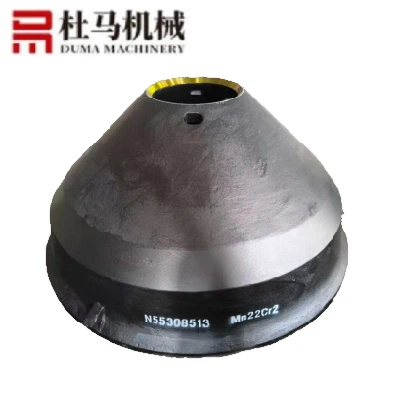
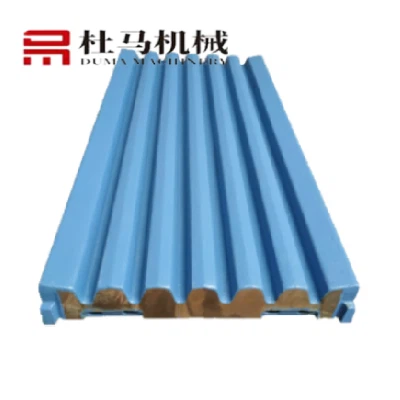
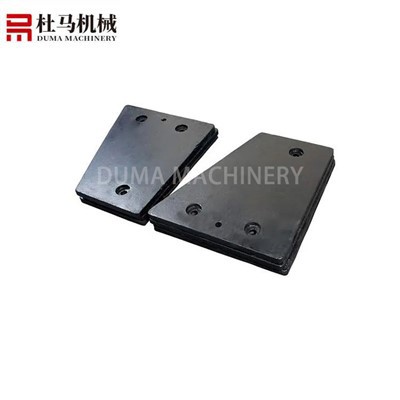
As a leading supplier of Crusher Jaw Plate Casting, I've witnessed firsthand the crucial role that heat-treatment processes play in enhancing the performance and durability of these essential components. In this blog, I'll delve into the various heat-treatment processes for Crusher Jaw Plate Casting, shedding light on their significance and benefits.
The Importance of Heat Treatment in Crusher Jaw Plate Casting
Crusher jaw plates are subjected to extreme conditions during operation, including high impact, abrasion, and pressure. These harsh environments demand materials with exceptional hardness, toughness, and wear resistance. Heat treatment is a critical step in the manufacturing process that can significantly improve these properties, ensuring that the jaw plates can withstand the rigors of crushing operations.
By carefully controlling the heating and cooling rates, heat treatment can alter the microstructure of the casting, resulting in a material that is better suited to the specific requirements of the application. This not only extends the service life of the jaw plates but also enhances the overall efficiency and productivity of the crushing equipment.
Common Heat-Treatment Processes for Crusher Jaw Plate Casting
Annealing
Annealing is a heat-treatment process that involves heating the casting to a specific temperature and then slowly cooling it. This process is used to relieve internal stresses, improve machinability, and refine the grain structure of the material. In the context of crusher jaw plate casting, annealing can help to reduce the risk of cracking and improve the overall toughness of the jaw plates.


During annealing, the casting is heated to a temperature above its critical range and held at that temperature for a specified period. This allows the atoms in the material to rearrange themselves, reducing internal stresses and improving the uniformity of the microstructure. After the holding period, the casting is slowly cooled, typically in a furnace, to prevent the formation of new stresses.
Normalizing
Normalizing is similar to annealing, but it involves a faster cooling rate. This process is used to refine the grain structure of the material and improve its mechanical properties, such as strength and hardness. Normalizing can also help to reduce the variability in the properties of the casting, ensuring that each jaw plate meets the required specifications.
To normalize a crusher jaw plate casting, it is heated to a temperature above its critical range and held at that temperature for a short period. The casting is then removed from the furnace and cooled in air. The faster cooling rate compared to annealing results in a finer grain structure, which enhances the strength and hardness of the material.
Quenching and Tempering
Quenching and tempering is a two-step heat-treatment process that is commonly used to produce high-strength and tough materials. In the quenching step, the casting is heated to a high temperature and then rapidly cooled by immersing it in a quenching medium, such as water, oil, or polymer. This rapid cooling causes the material to transform into a hard and brittle phase called martensite.
However, martensite is too brittle to be used in most applications, so the casting is then tempered. Tempering involves heating the quenched casting to a lower temperature and holding it at that temperature for a specified period. This process reduces the brittleness of the martensite and improves its toughness, while still maintaining a high level of hardness.
Quenching and tempering can significantly improve the wear resistance and impact toughness of crusher jaw plates, making them suitable for use in demanding crushing applications.
Surface Hardening
Surface hardening is a heat-treatment process that is used to increase the hardness and wear resistance of the surface of the casting while maintaining the toughness of the core. This process is particularly useful for crusher jaw plates, as the surface is the part that comes into contact with the material being crushed and is therefore subject to the most wear.
There are several methods of surface hardening, including induction hardening, flame hardening, and nitriding. Induction hardening involves heating the surface of the casting using an induction coil and then quenching it to form a hard surface layer. Flame hardening is similar, but it uses a flame to heat the surface of the casting. Nitriding involves introducing nitrogen into the surface of the casting to form a hard nitride layer.
Surface hardening can significantly extend the service life of crusher jaw plates by reducing the wear on the surface and improving the overall performance of the casting.
Selecting the Right Heat-Treatment Process
The choice of heat-treatment process for crusher jaw plate casting depends on several factors, including the material of the casting, the specific requirements of the application, and the desired properties of the jaw plates. For example, if the jaw plates are made of a high-carbon steel, quenching and tempering may be the most appropriate heat-treatment process to achieve the desired hardness and toughness.
On the other hand, if the jaw plates are made of a low-carbon steel, annealing or normalizing may be sufficient to improve the machinability and reduce the internal stresses. In some cases, a combination of heat-treatment processes may be used to achieve the best results.
As a supplier of Crusher Jaw Plate Casting, we work closely with our customers to understand their specific requirements and recommend the most suitable heat-treatment process for their application. We have a team of experienced engineers and technicians who are experts in heat treatment and can ensure that each jaw plate is heat-treated to the highest standards.
Conclusion
Heat treatment is a critical step in the manufacturing process of Crusher Jaw Plate Casting. By carefully selecting and controlling the heat-treatment process, we can significantly improve the performance and durability of the jaw plates, ensuring that they can withstand the harsh conditions of crushing operations.
At our company, we are committed to providing our customers with high-quality Crusher Jaw Plate Casting that are heat-treated to the highest standards. We offer a wide range of jaw plates, including Jaw Crusher Parts Fixed Jaw Plate, Mn18 For Mobile Jaw Crusher, and Movable Jaw Plate For Jaw Crusher, all of which are designed to meet the specific needs of our customers.
If you are in the market for Crusher Jaw Plate Casting, we invite you to contact us to discuss your requirements. Our team of experts will be happy to provide you with more information about our products and services and help you select the right jaw plates for your application.
References
- ASM Handbook, Volume 4: Heat Treating. ASM International, 1991.
- Heat Treatment Principles and Techniques. George E. Totten, David Scott MacKenzie, and J. Christopher Lindberg. Marcel Dekker, 1993.
- Steel Heat Treatment: Metallurgy and Technologies. Robert W. Hertzberg, Richard D. Vinci, and John P. Gibbs. CRC Press, 2006.