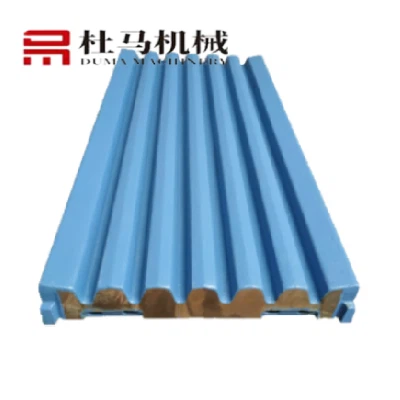
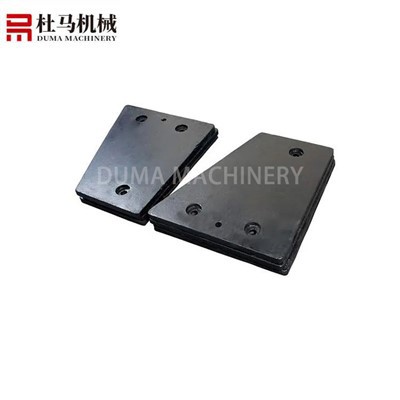
Hey there! As a supplier of jaw plates for rock crushers, I've seen firsthand how crucial the weight of a jaw plate can be to the operation of a rock crusher. You might think it's just a piece of metal, but trust me, its weight plays a significant role in the overall performance of the crusher.
Let's start with the basics. A rock crusher's main job is to break down large rocks into smaller, more manageable pieces. The jaw plate is one of the most important components of this machine. It's the part that actually comes into contact with the rocks, applying the force needed to crush them.
The weight of the jaw plate directly affects the crushing force. In general, a heavier jaw plate can generate more crushing force. This is because of Newton's second law of motion, which states that force equals mass times acceleration (F = ma). When the jaw plate strikes the rocks, the greater its mass (weight), the greater the force it can exert on the rocks.
Imagine trying to break a big rock with a small hammer and a large hammer. The large hammer, being heavier, can deliver a more powerful blow to the rock. Similarly, a heavier jaw plate can crush larger and harder rocks more effectively.
However, it's not all about the crushing force. The weight of the jaw plate also affects the energy consumption of the rock crusher. A heavier jaw plate requires more energy to move. This means that the crusher's motor has to work harder to drive the jaw plate. As a result, the energy consumption of the crusher increases.
This is a balance that needs to be struck. On one hand, you want a heavy enough jaw plate to provide sufficient crushing force. On the other hand, you don't want it to be so heavy that it significantly increases the energy consumption.
Another factor to consider is the wear and tear of the jaw plate. The weight affects how the jaw plate interacts with the rocks. A heavier jaw plate exerts more pressure on the rocks, which can lead to faster wear of the jaw plate. This is because the increased pressure causes more friction between the jaw plate and the rocks, wearing down the surface of the jaw plate.
So, how do you choose the right weight for your jaw plate? It depends on several factors. First, you need to consider the type of rocks you'll be crushing. If you're dealing with hard rocks like granite or basalt, you'll need a heavier jaw plate to provide enough crushing force. For softer rocks like limestone, a lighter jaw plate might be sufficient.
Second, think about the size of the rocks. Larger rocks require more force to crush, so a heavier jaw plate would be more suitable. However, if you're mostly dealing with small rocks, a lighter jaw plate can work just fine.
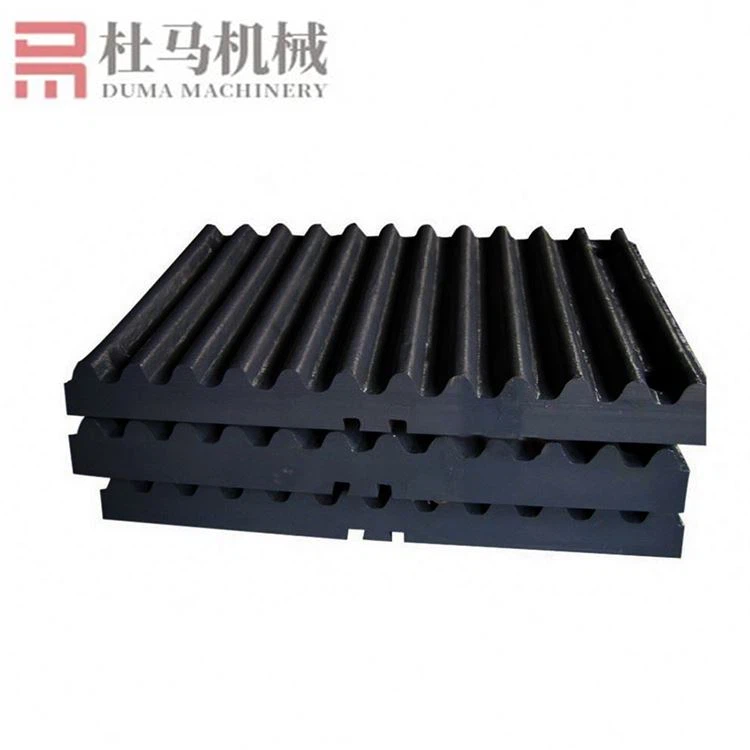

Third, consider your energy budget. If you're concerned about energy costs, you might want to choose a lighter jaw plate to reduce energy consumption. But if your priority is to crush large and hard rocks quickly, then a heavier jaw plate might be worth the extra energy.
As a supplier, I have a wide range of jaw plates available. We offer Jaw Crusher Parts Fixed Jaw Plate, which are known for their durability and performance. Our High Manganese Jaw Crusher Parts are made from high - quality materials, providing excellent wear resistance. And our Jaw Plate Jaw Fixed Jaw Crusher is designed to fit perfectly with various rock crushers.
When you're in the process of choosing the right jaw plate for your rock crusher, remember these points about weight. And don't hesitate to reach out to us. We've got the expertise and the products to help you make the best decision based on your specific needs. Whether you're a small - scale operation or a large mining company, we can provide the right jaw plate solutions for you.
In conclusion, the weight of a jaw plate has a profound impact on the operation of a rock crusher. It affects the crushing force, energy consumption, and wear and tear. By carefully considering your requirements and choosing the appropriate weight, you can ensure optimal performance of your rock crusher. If you're looking to upgrade or replace your jaw plates, we'd love to discuss your options with you. Just get in touch, and let's talk about how we can help you get the most out of your rock crusher.
References
- Smith, J. (2018). Handbook of Rock Crushing. Mining Press.
- Johnson, A. (2019). The Science of Crushers. Industrial Equipment Journal.
- Millington, R. (2020). Jaw Plate Design and Function. Machinery World.