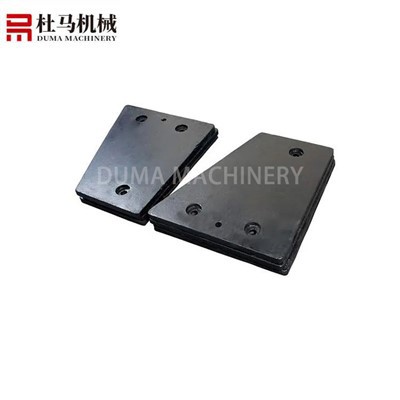
Jaw crushers are a staple in the mining, construction, and aggregate industries, relied upon to break large rocks and ores into smaller, more manageable sizes. At the heart of these powerful machines are the wear plates, which absorb the brunt of the crushing forces and are subject to significant wear and tear. As a leading supplier of [Jaw Crusher Wear Plates], we understand the importance of recognizing the signs that indicate it's time to replace these critical components. In this blog, we'll explore the key indicators that your jaw crusher wear plates need attention, ensuring optimal performance and preventing costly downtime.
1. Reduced Crushing Efficiency
One of the first signs that your jaw crusher wear plates may need replacement is a noticeable decrease in crushing efficiency. As the wear plates experience prolonged use, the surface profile that is designed to grip and break down the material begins to wear away. This wear can result in the material slipping through the crusher without being adequately crushed, leading to larger than expected output sizes. If you find that your crusher is no longer producing the desired particle size or that the production rate has dropped, it could be a clear indication that the wear plates are worn and need to be replaced.
For instance, if you're using a jaw crusher to produce a specific size of aggregate for construction purposes and the output is consistently coarser than the required specification, it's time to inspect the wear plates. Our manganese jaw plate is designed to maintain its shape and performance over an extended period, providing consistent crushing efficiency.
2. Excessive Noise and Vibration
Another telltale sign of worn jaw crusher wear plates is an increase in noise and vibration during operation. As the wear plates wear unevenly or develop cracks, the crusher's normal operation can become unbalanced. This imbalance causes the machine to vibrate more than usual, which can be felt throughout the equipment and may even be audible from a distance. Excessive noise and vibration not only indicate that the wear plates are in need of replacement but can also lead to further damage to the crusher's components if left unaddressed.
If you notice a significant increase in the noise level or vibration of your jaw crusher, it's crucial to shut down the machine immediately and inspect the wear plates. Our Mn18 for Mobile Jaw Crusher is engineered to provide a stable and quiet operation, reducing the risk of excessive noise and vibration.
3. Visible Wear and Damage
Visual inspection is one of the most straightforward ways to determine if your jaw crusher wear plates need to be replaced. Over time, the wear plates will naturally show signs of wear, such as grooves, scratches, and reduced thickness. However, if you notice deep gouges, large cracks, or chunks missing from the wear plates, it's a clear indication that they are no longer fit for use and should be replaced as soon as possible.
Regularly inspecting the wear plates can help you catch these issues early and prevent more serious damage to the crusher. If you're unsure about the condition of your wear plates, our team of experts is available to provide guidance and assistance. We offer a wide range of Wearing Spare Parts Jaw Plates that are designed to withstand the harsh conditions of crushing operations.
4. Increased Power Consumption
Worn jaw crusher wear plates can also cause an increase in power consumption. As the wear plates lose their effectiveness, the crusher has to work harder to break down the material, resulting in higher energy usage. If you notice a significant increase in your crusher's power consumption without any corresponding increase in production, it could be a sign that the wear plates are worn and need to be replaced.
Replacing the wear plates with new, high-quality ones can help improve the crusher's efficiency and reduce power consumption. Our wear plates are made from advanced materials and engineered to provide maximum performance and durability, helping you save on energy costs in the long run.
5. Material Build-Up
Material build-up on the wear plates is another sign that they may need to be replaced. As the wear plates wear down, the spaces between the teeth or grooves can become clogged with crushed material. This build-up can prevent the material from flowing freely through the crusher, reducing its efficiency and potentially causing damage to the machine.
If you notice material build-up on the wear plates, it's important to clean them thoroughly. However, if the build-up is persistent or difficult to remove, it may be a sign that the wear plates are too worn and need to be replaced. Our wear plates are designed with a smooth surface finish to minimize material build-up and ensure optimal performance.
Conclusion
Recognizing the signs that your jaw crusher wear plates need to be replaced is essential for maintaining the efficiency, safety, and reliability of your crushing operations. By paying attention to the indicators discussed in this blog, such as reduced crushing efficiency, excessive noise and vibration, visible wear and damage, increased power consumption, and material build-up, you can ensure that your crusher is operating at its best.


As a trusted supplier of jaw crusher wear plates, we are committed to providing high-quality products and exceptional customer service. Our manganese jaw plate, Mn18 for Mobile Jaw Crusher, and Wearing Spare Parts Jaw Plates are designed to withstand the toughest conditions and provide long-lasting performance. If you have any questions or need assistance with your jaw crusher wear plates, please don't hesitate to contact us. We look forward to helping you keep your crushing operations running smoothly.
References
- Powell, M.S., & Timbers, R.P. (2001). The Science and Technology of Jaw Crushers. Mineral Processing and Extractive Metallurgy Review, 22(1 - 2), 1 - 52.
- Kalman, H., & Lovas, I. (2012). Design and Analysis of Crushing Machines. Springer.
- Singh, I. (2018). Wear and Tear in Crushing Equipment: Causes and Mitigation. Journal of Mining and Metallurgy, Section B: Metallurgy, 54(2), 227 - 234.