Hey there! As a supplier of jaw plates for crushers, I often get asked about the difference between fixed and movable jaw plates. It's a pretty important topic, especially if you're in the market for new jaw plates or just want to understand how crushers work better. So, let's dive right in!
What Are Jaw Plates Anyway?
First off, let's quickly go over what jaw plates are. Jaw plates are essential components of jaw crushers. These crushers are used in various industries, like mining, construction, and recycling, to break down large rocks and other materials into smaller, more manageable pieces. The jaw plates are the parts that actually come into contact with the material being crushed, so they take a lot of wear and tear.
Fixed Jaw Plates
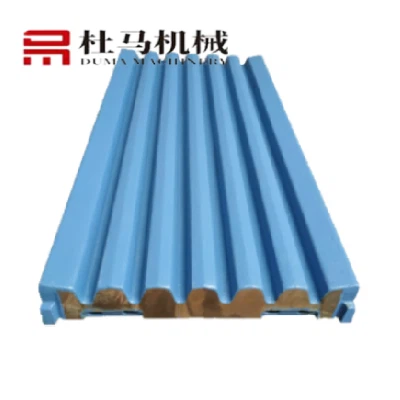
The fixed jaw plate, as the name suggests, is the stationary part of the jaw crusher. It's mounted on the frame of the crusher and doesn't move during the crushing process. Think of it as the solid wall against which the material is pushed.
One of the key features of fixed jaw plates is their stability. Because they're fixed in place, they provide a consistent surface for the material to be crushed against. This stability is crucial for ensuring efficient and uniform crushing. The fixed jaw plate also helps to support the overall structure of the crusher, preventing excessive vibrations and maintaining the integrity of the machine.
Another important aspect of fixed jaw plates is their shape and design. They typically have a flat or slightly curved surface, which is optimized for the specific type of material being crushed. For example, if you're crushing hard, abrasive rocks, you might need a fixed jaw plate with a more rugged surface to withstand the wear.
If you're interested in learning more about fixed jaw plates, you can check out our Jaw Crusher Parts Fixed Jaw Plate page. We offer a wide range of fixed jaw plates that are designed to meet the needs of different crushers and applications.


Movable Jaw Plates
In contrast to the fixed jaw plate, the movable jaw plate is the part that moves during the crushing process. It's connected to an eccentric shaft, which causes it to swing back and forth in a circular motion. This swinging action creates a squeezing force between the movable and fixed jaw plates, which crushes the material.
The main advantage of movable jaw plates is their ability to apply a dynamic force to the material. As the movable jaw plate swings towards the fixed jaw plate, it compresses the material, breaking it into smaller pieces. This dynamic crushing action is more effective than a static force, as it can handle a wider range of materials and particle sizes.
Movable jaw plates also need to be designed to withstand the high impact forces generated during the crushing process. They're usually made from high-strength materials, such as manganese steel or alloy steel, which can resist wear and deformation. Additionally, the shape and profile of the movable jaw plate are carefully engineered to optimize the crushing efficiency and reduce energy consumption.
If you're looking for a reliable movable jaw plate, take a look at our Jaw Crusher Swing Stock. We have a variety of movable jaw plates that are built to last and perform well in demanding applications.
Key Differences Between Fixed and Movable Jaw Plates
Now that we've covered the basics of fixed and movable jaw plates, let's summarize the key differences between them:
- Movement: The most obvious difference is that the fixed jaw plate is stationary, while the movable jaw plate moves during the crushing process.
- Function: The fixed jaw plate provides a stable surface for the material to be crushed against, while the movable jaw plate applies a dynamic force to break the material.
- Design: Fixed jaw plates typically have a flat or slightly curved surface, while movable jaw plates have a more complex shape to optimize the crushing action.
- Wear Patterns: Due to their different functions and movement patterns, fixed and movable jaw plates experience different wear patterns. The fixed jaw plate usually wears more evenly, while the movable jaw plate may experience more concentrated wear in certain areas.
Choosing the Right Jaw Plates for Your Crusher
When it comes to choosing the right jaw plates for your crusher, there are several factors to consider. Here are some tips to help you make the best decision:
- Material Compatibility: Make sure the jaw plates are made from a material that's suitable for the type of material you're crushing. For example, if you're crushing hard, abrasive rocks, you'll need jaw plates made from a high-strength material like manganese steel.
- Crusher Type: Different crushers have different requirements for jaw plates. Make sure you choose jaw plates that are specifically designed for your crusher model.
- Wear Resistance: Look for jaw plates that offer good wear resistance to ensure a longer service life and reduce maintenance costs.
- Cost: While cost is an important factor, it shouldn't be the only consideration. A higher-quality jaw plate may cost more upfront, but it can save you money in the long run by reducing downtime and replacement costs.
If you're still not sure which jaw plates are right for you, our team of experts is here to help. We can provide you with personalized advice and recommendations based on your specific needs and requirements. Just visit our Jaw Fixed Plate and Swing Plate page to learn more about our products and services.
Conclusion
In conclusion, fixed and movable jaw plates play crucial roles in the operation of jaw crushers. Understanding the differences between them can help you choose the right jaw plates for your crusher and ensure optimal performance and efficiency. Whether you're a mining company, a construction contractor, or a recycling facility, having high-quality jaw plates is essential for getting the job done right.
If you're interested in purchasing jaw plates for your crusher, we'd love to hear from you. Our team is dedicated to providing the best products and services to our customers. Contact us today to start a conversation about your jaw plate needs and let's work together to find the perfect solution for your business.
References
- [Crushing Equipment Handbook](Publisher: XYZ Publishing, Year: 20XX)
- [Mining and Aggregate Processing Technology](Author: John Doe, Publisher: ABC Press, Year: 20XX)